What is the most accurate Bible translation?
A brief word from us before you read: The Word for the World is dedicated to ending Bible poverty by empowering indigenous communities to lead their own Bible translation projects. Our mission is to ensure that everyone can experience the power of God’s Word in their own heart language. If you share our vision of a world where every nation and tongue has access to the Bible, we invite you to support this mission through your prayers and giving.
How do you pick the most accurate Bible translation?
If you’re new to Christianity, or on the hunt for a new Bible, you’re likely to have been faced with this conundrum: you’re standing in the bookshop, or browsing the digital ‘bookshelf’ online, utterly overwhelmed by the sheer number of translations available.
You want to know which Bible to read; which is the most accurate? Which translation is closest to Jesus’ actual words; which one hasn’t lost the real meaning over time? Currently, there are over sixty English Bible translations to choose from, which doesn’t make the decision any easier.
Bible sales have reached a record high in both the UK and the US, climbing year on year since 2019: people are reaching for God’s Word in larger numbers than ever before. But it’s not just about how many Bibles are being bought, it’s which translations they are choosing and why.
‘The Bible isn’t just the bestselling book in English. It’s the most translated book in human history, with no other text even close.’
What does Bible accuracy even mean?
So where do you start when choosing the right Bible for you?
The first question to ask is, are you looking for the most ‘accurate’ translation, or simply the translation that is best for you, based on your reading style, age, ability and comprehension?
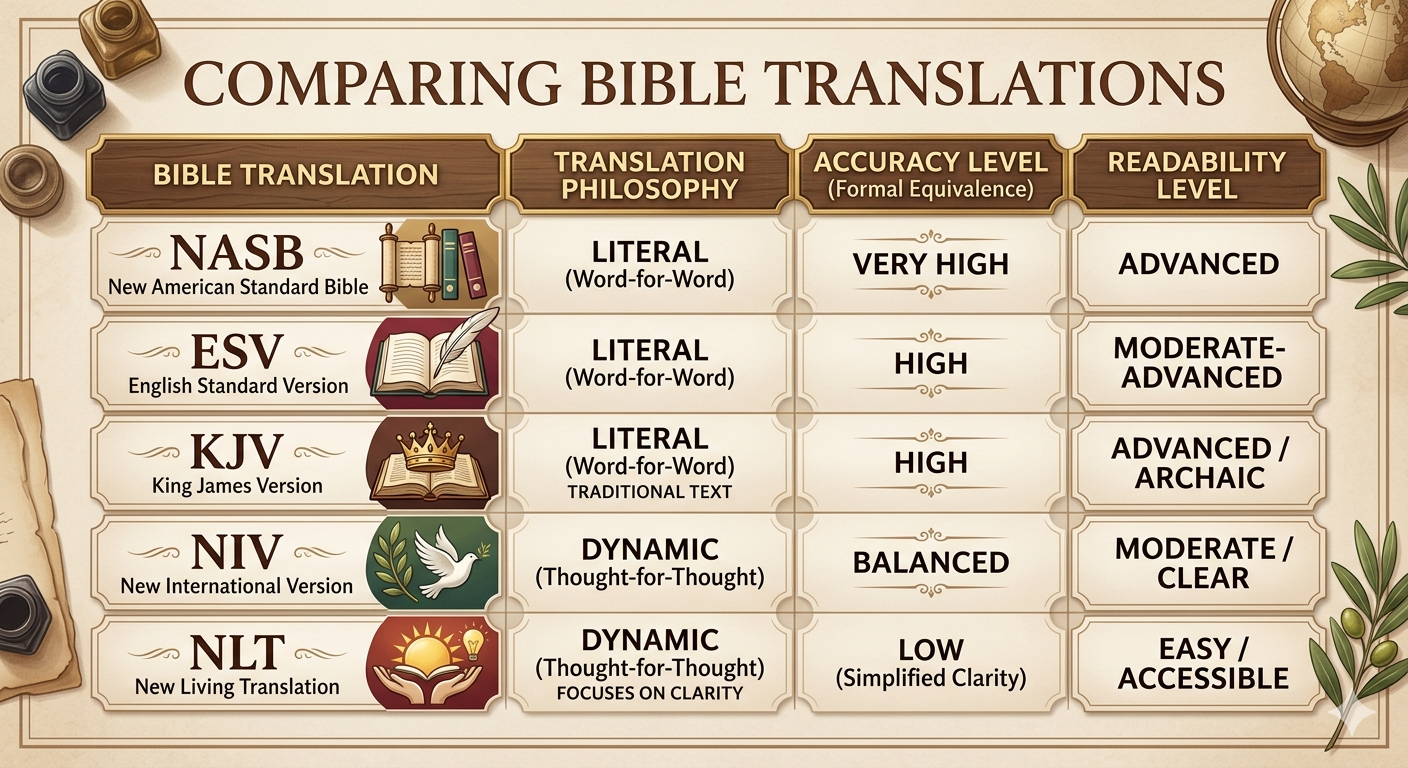
Traditionally, translations of the Bible can be arranged along a spectrum of two extremes, literal and free. For example, a literal translation would be a word for word translation such as the ESV, while at the opposite end of the scale, a free translation would be a paraphrased translation, such as The Message, where passages have been reworked to write them in a more conversational, or understandable way. A thought for thought version, such as the NIV, would sit somewhere in the middle.
But shouldn’t all translations be word for word, you may ask? Well, it’s not quite that simple. The Old Testament is mostly written in Hebrew (with a few sections in Aramaic), a language with very few words, which means that each word has multiple meanings, and English translators need to work hard to convey the specific meaning, often using more words than the original text to help with comprehension. Also, word for word translation renders language very stiffly and awkwardly. Here’s a literal translation of John 3:16:
"For God did so love the world, that His Son—the only begotten—He gave, that every one who is believing in him may not perish, but may have life age-during."
Fancy reading all 66 books of the Bible like this? Direct word for word translations can be quite intimidating. Instead, translators tend to sacrifice some literalness for clarity, balancing reliability with readability.
‘The goal is to stay as close to the text without becoming unreadable.’
How do I choose the most accurate version of the Bible?
If you are judging accuracy by how close the text is to the original Hebrew/Greek that it was written in, The Interlinear translation always comes out on top, closely followed by the New American Standard Version (NASB) and English Standard Version (ESV). These are considered to be the most strictly literal word-for-word translations which preserve the original grammar and word order of the text. These literal, or word for word, versions give priority to form over meaning. You can trust that they are as close to the original wording as possible, but the text might be hard for you to understand. In contrast, a thought for thought translation will sacrifice accuracy for readability to some extent.
There are concerns that paraphrase versions, at the farthest end of the ‘accuracy’ scale, allow for too much interpretation, but when it comes to word for word and thought for thought translations, we can trust that the translators of the major English translations have each done a good job, as it’s clear that they are all in agreement about the main messages of the Bible.
‘The literal versions come closest to providing a word-for-word translation in terms of the grammar, vocabulary, and style of the original. Nonliteral versions with extended vocabulary attempt to provide a Bible that remains close to the original but makes use of more up-to-date vocabulary and style... Each of these approaches has its own appeal and drawbacks.’
What was the very first translation of the Bible?
Bible translation has always been a key part of God’s mission. Around 130 BC, the first translation from Hebrew to Greek was completed, famously known as the Septuagint. The term means ‘seventy’, referring to the seventy-two translators – six from each tribe of Israel – who worked on the project.
The next major translation project took place in 382 AD, commissioned by Pope Damascus I. This Latin translation became known as the Vulgate, meaning ‘common’, as it was written in ‘vulgar Latin’, the everyday language of the common people in the Roman Empire. The aim was to create a translation that everyone could understand, that would help unify the church.
‘This is the motivation behind so many Bible translations: they are all essentially seeking a way to present the truth of God’s Word in a way that is the most accurate and yet the most understandable by the most people. This is no simple task.’
What was the first translation of the Bible into English?

Amazingly, the Vulgate served as the primary, authoritative Bible text in England until the 1300’s - until John Wycliffe came on the scene. He was an Oxford theologian who believed that everyone should have access to the Bible, rather than just the Catholic church. He famously said:
‘The Holy Scriptures are the faith of the church, and the more widely its true meaning becomes known, the better it will be.’
He produced an early translation which was a word-for-word translation, and a later version which used a more thought-for-thought approach. Both versions were based on the Vulgate, rather than the original Hebrew and Greek manuscripts. Although condemned by the church, this was the first step in bridging the gap between Latin and everyday spoken English.
150 years later, with Wycliffe’s handwritten Bibles still outlawed, William Tyndale picked up his torch. A gifted linguist, Tyndale began translating the Bible from Greek to English for the first time. These were groundbreaking, accessible translations that even a layman could understand. C. S. Lewis said he was ‘the best prose writer of his age.’
For Tyndale’s efforts he was hunted down and executed. His final words as he was burned at the stake were:
“Lord, open the King of England’s eyes.’
‘In exploring the history and sources of English Bible translations, we see a complex interplay of linguistic scholarship, historical context and theological intention. Each translation, from Wycliffe’s pioneering work to the meticulous efforts of modern scholars, contributes uniquely to our understanding of the Bible.”
The Influence of The King James Version (KJV)

As Bible sales climb, there is one formal, word for word version that has stood the test of time. The 415-year-old KJV continues to outsell newer translations such as the NLT or The Message by a long way. It has been pondered if this is because Tyndale’s influence is particularly evident in the KJV: roughly 84% of the KJV is word for word of Tyndale’s translations.
This beautiful translation was commissioned in 1604 by King James I, due to the chaotic state of English Biblical translations in the late 16th and early 17th century. The King wanted to produce a standardized English version that would become the dominant version in England, and so, fifty-four scholars were commissioned to create a translation that would then be ‘authorised’ by the King.
Based on Textus Receptus (a Greek New Testament text from the 1500s), the KJV was the first translation to gain and maintain near-universal acceptance throughout the English-speaking world, and it is still highly quoted and well-known today. Phrases such as ‘bottomless pit’, ‘scapegoat’ and ‘turn the other cheek’ would not be in our vocabulary if it were not for this translation.
‘The KJV is sometimes treated as a relic, but the data tells a different story. It remains the dominant translation…and continues to outsell most modern translations. Part of this is literary – the KJV’s cadence shaped modern English itself. Part of it is liturgical: many older hymns, prayers and memorized passages echo KJV phrasing.’
What translation is right for you?

You might be thinking, well all these facts are very interesting, but what’s the right translation for me?
Well, as we’re sure you’ll agree, the goal is to find the version that speaks to your heart. Try different translations; grapple with them and get stuck in. If one version proves tricky, don’t worry, because reading God’s Word is never wasted time, and we are so blessed in the English language to have other translations to try.
The Bible is meant to be mediated on, chewed over; you have to work hard to get to grips with it, no matter what translation you choose. Proverbs 2 encourages us to dig deep into its treasures:
‘My son, if you accept my words
and store up my commands within you…
and if you look for it as for silver
and search for it as for hidden treasure,
then you will understand the fear of the Lord
and find the knowledge of God.’
Proverbs 2 v 2-5
Ultimately, the right Bible translation for you will depend on your age, reading style, and comprehension level. And the great thing is that there are so many accessible Bibles available for kids, teens, and those with learning disabilities. Usually the ‘right’ translation is picked because it meets the right need. If you want maps, extra or in-depth footnotes, there are great study Bibles available too. It can even be useful to have several translations for side-by-side comparisons, and thanks to great Bible apps on our phones, that’s easy to do.
‘The most popular Bible translations – NIV, ESV, KJV, NLT, NKJV – earned their spots through a combination of accessibility, accuracy, denominational backing, and longevity. But ‘most popular’ isn’t the same as ‘best for you’. The right translation is the one you’ll actually open, read and engage with.’
Our approach to translation
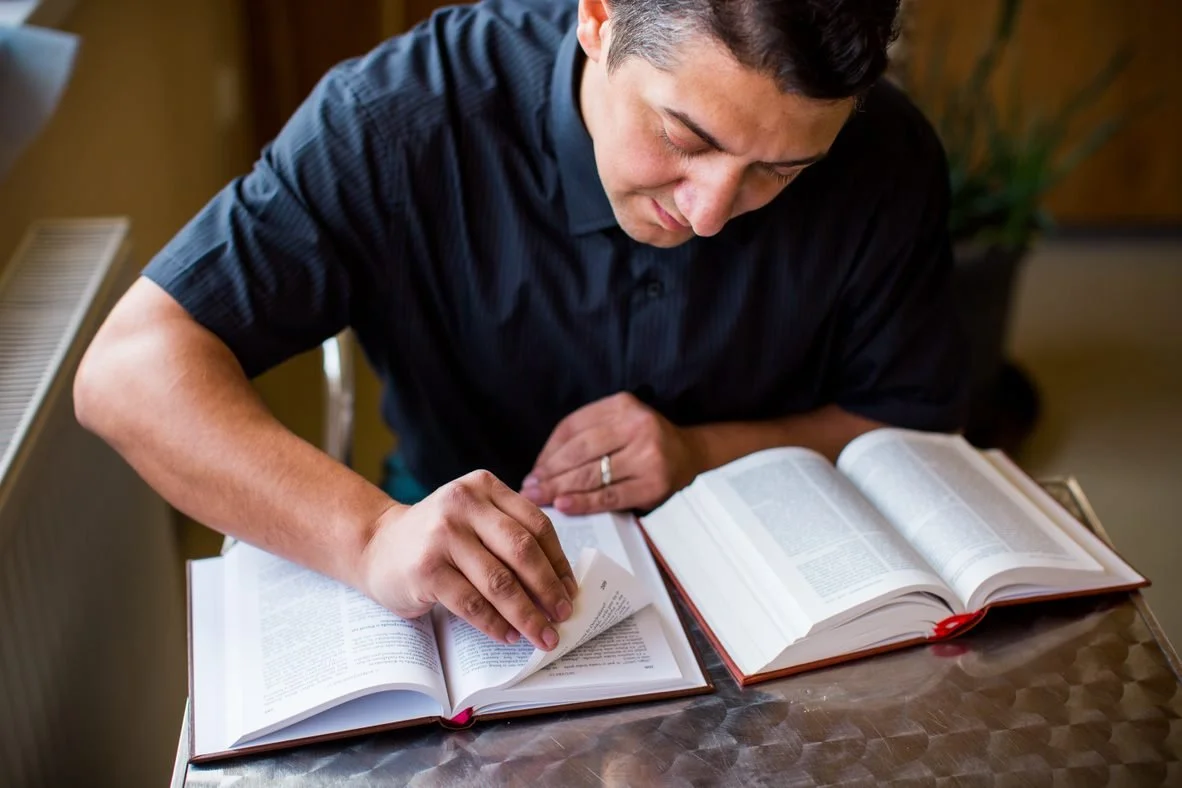
At The Word For The World, our translation method sits somewhere in the middle. We aim to produce natural, accurate and clear translations of the Bible in indigenous speakers’ heart languages. This means that we place more emphasis on conveying the meaning of the original text in a natural everyday style of language than a basic word for word translation, but we also ensure that the translators remain faithful to the original author's literary style of writing, and the impact he wished to create on his readers.
Like the Good News version, this is called a ‘dynamic equivalent’ translation method. You can read more about our approach here:
Share the blessing
We are so blessed that God’s Word is available to anyone in English, regardless of background, reading proficiency or comprehension level. We have the luxury of choice, when some do not even have the Bible translated into their own language yet.
The Word For The World is currently involved in 451 Bible translation projects, both written and oral, in 34 different countries, on three continents. These people groups desperately need God’s Word in their mother tongue.
As you consider, or reflect upon what your preferred translation of the Bible is, please also consider prayerfully if you could support us in our translation work to help share the gospel with those who have never heard it in their own language before.
Read more like this…