
The reality of Bible Translation - navigating non-literal language
A brief word from us before you read: The Word for the World is dedicated to ending Bible poverty by empowering indigenous communities to lead their own Bible translation projects. Our mission is to ensure that everyone can experience the power of God’s Word in their own heart language. If you share our vision of a world where every nation and tongue has access to the Bible, we invite you to support this mission through your prayers and giving.
Lost in Translation?
Google translate is something we take for granted nowadays, isn’t it? It’s never been easier to quickly type an unknown word or phrase into that little box and get a pretty good translation instantly appear underneath.
But have you ever thought about how much harder this is for lesser-known languages that google isn’t so familiar with - or oral languages that have no written form?
Now imagine trying to translate a 750,000-word Bible into such a language!

The Challenge of Translating Idioms
And let’s go a step further – have you heard of an idiom? They’re a group of words that together don’t make any literal sense, but instead carry a non-literal meaning - for example, cultural turns of phrase like ‘break a leg’ or ‘spill the beans’. These figurative sayings cannot be translated word for word into other languages, as those cultures likely don’t share the same colloquialisms as us. This poses a very real problem as linguists have catalogued between 250-300 core idiomatic expressions in the Bible.

Many of these Hebrew and Greek idioms that have been translated during the course of translating the Bible into the versions we have today have shaped our linguistic landscape. Phrases such as ‘an eye for an eye’ (Leviticus 24 v 19-20), ‘by the skin of my teeth’ (Job 19 v 20), even ‘bite the dust’ (Psalm 72 v 9) all find their roots in the original Bible texts. Now these idioms may be relatively easy to translate, depending on the cultural background - but what about having to translate ‘white as snow’ (Isaiah 1 v 18) to a culture that has never seen, or experienced snow?
‘The challenge lies in conveying the intended meaning without sacrificing the idiom’s spirit, which tests every translator’s creativity and cultural sensitivity’. Transatlantic Translations group’ [1]
Interview with Bible translator - Barry Funnell
Barry Funnell is our Vice President of Quality Assurance and Acceleration, and an International Consultant for The Word for the World. He has been substantially involved in the completion of the Sena Bible (Malawi) which was published in 2006, and has started translation projects in ten Tanzanian languages. The New Testament was published in these ten languages in 2016.
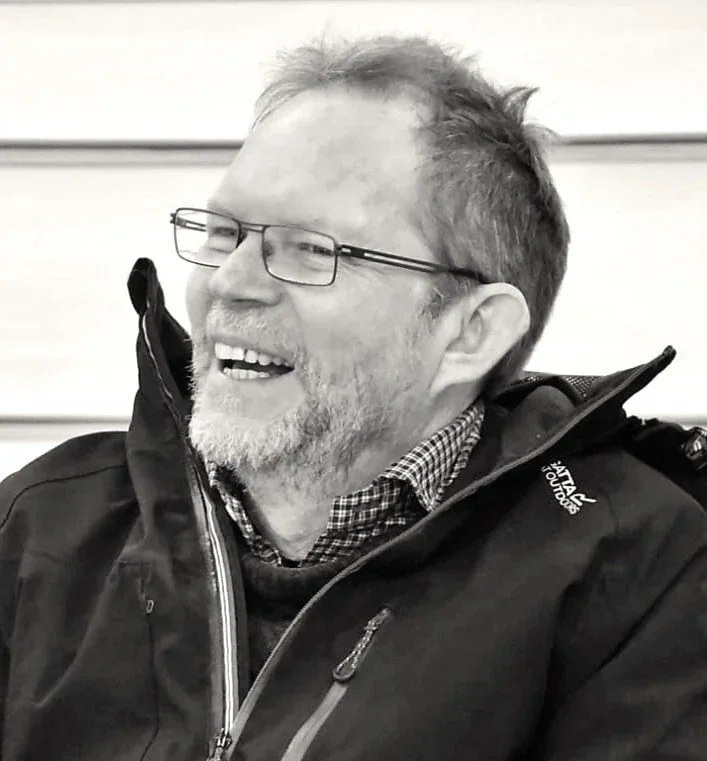
As a ‘man on the ground’, we asked him about the process of Bible translation, and the challenges idioms can pose to translation teams.
What is the first thing you do when translating the Bible for a culture that has never had one before? The first thing that we do is thorough research. We check that their language is uniquely specific by doing sociolinguistic research to ensure that the language is a unique variety and not spoken in other languages where there is already a Bible.
The second thing we do is to look for people who are interested in translating the Bible into their own language, and who have theological training, or who can at least speak another language in which they understand the Bible well. We train these translators to ensure that they have the principles of translation and then can transfer the meaning from the Scripture into their own language. Oral Bible translation is a good technique to use with these cultures. You first get the person to familiarise themselves with the text, then secondly actually internalise it and understand exactly what the translation is saying. And then thirdly, they articulate it by speaking it into a recording device in their own mother tongue in a way that is natural, accurate and clear to the source text they are using.
What does a normal day of Bible translation look like? A normal day of translation begins with group devotion, and then each translator will do a first draft of the book of the Bible they are translating. The draft uses two versions of the Bible, as well as translator’s notes and handbooks etc to help discover the meaning of difficult passages. They spend the first few hours of the day translating about twelve verses. Then the other team members will sit down together and do a group check or team check. They will look at each other's translation, refer to the source text of the Bible, and review, analyse and correct if needed. They could either do a review of the translation with the community in the afternoon to ensure the community can understand the translation, and to ensure that the best words are being used by the translators. If the team has access to an exegetical advisor, he or she will help to ensure that they have interpreted the Scripture correctly, and that the translation is accurate, natural and clear in preparation for a consultant to check it.
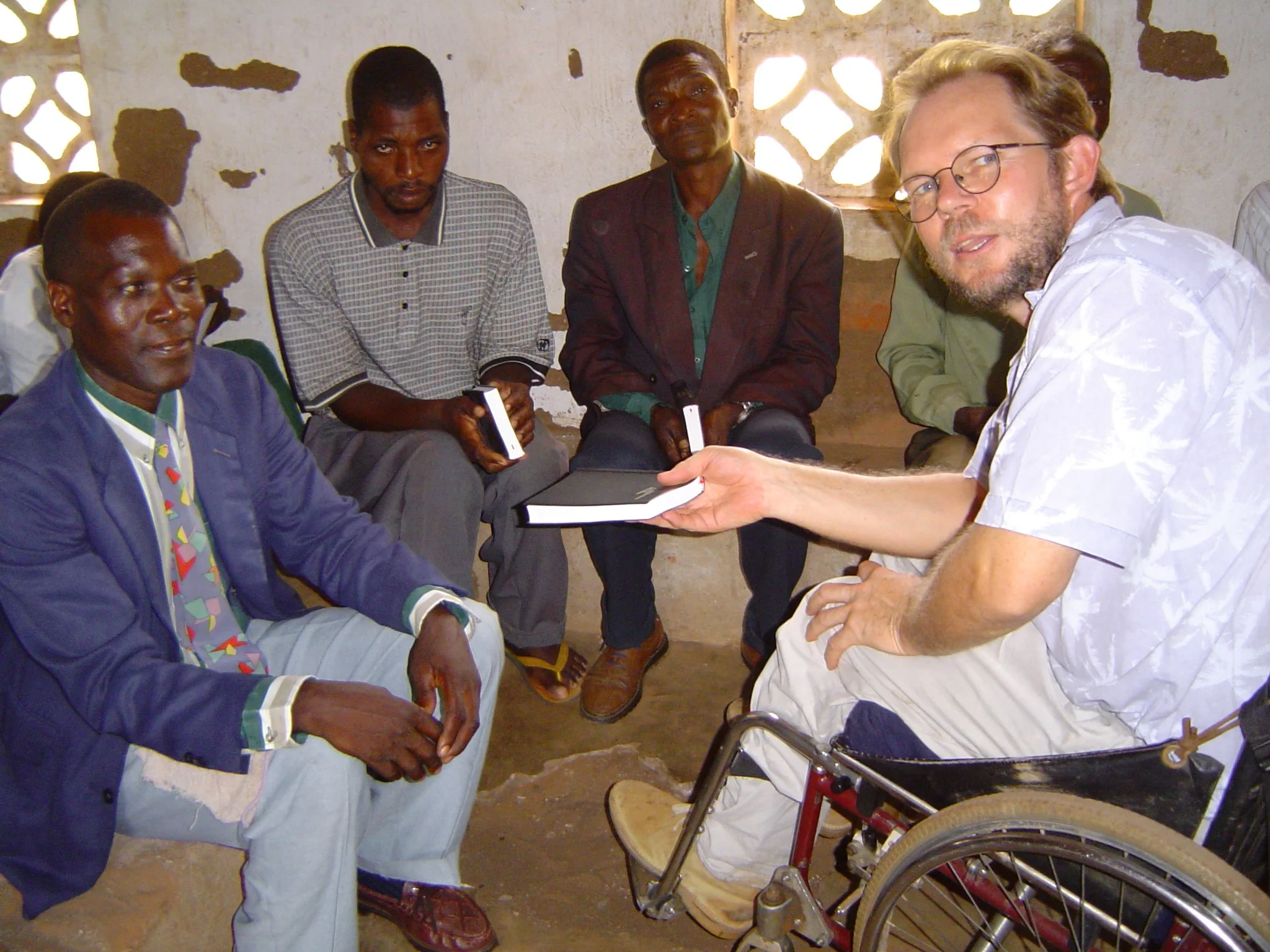
How do you deal with transliterations such as Amen, Hallelujah, or Selah? The words need to sound natural in the translation. E.g. in Bantu the words would be Ameni, Haleluya, and Sela.
How do you translate idioms? The most important thing in translating idioms is that the meaning of the idiom should be understood. Some languages use very similar idioms with the same meaning, but if there is no similar idiom, we rather translate the meaning directly e.g. ‘it rained cats and dogs’ becomes ‘it rained very heavily’.
Do you have any examples of challenging idioms you’ve had to translate? In Philippians 1.23 it says, ‘I am pulled in two directions’. But in Sena, we would say, ‘Pulled here and there’. Idioms are sometimes used to tell the time e.g. In the Ethiopian Maale Bible translation, ‘Jesus died at 3pm’ became ‘when the bees went out to play’, because many of the Maale people are beekeepers and simply tell the time by bee activity!
Have you ever had to omit idioms – and is this ok? Yes, sometimes this happens - in Romans 12.20 it says, ‘if he is thirsty, give him something to drink. In doing this, you will heap burning coals on his head.’ Many translations need a literal translation instead, for example, in the Chisnea translation it says, ‘you will make them feel ashamed’, or ‘burn with shame’ (Good News).
Is there a Biblical issue when you have to use cultural substitution (i.e. ‘That’s not what Jesus said!’) Well, the word ‘synagogue’ is translated as ‘house of prayer for the Jews’. Unknown animals can also be substituted with something similar in the culture if they are being used as figures of speech e.g. Rev 13.2 ‘The beast I saw resembled a leopard, but had feet like those of a bear’ – a bear is not familiar to some, so hyena was used in the Chisena translation.
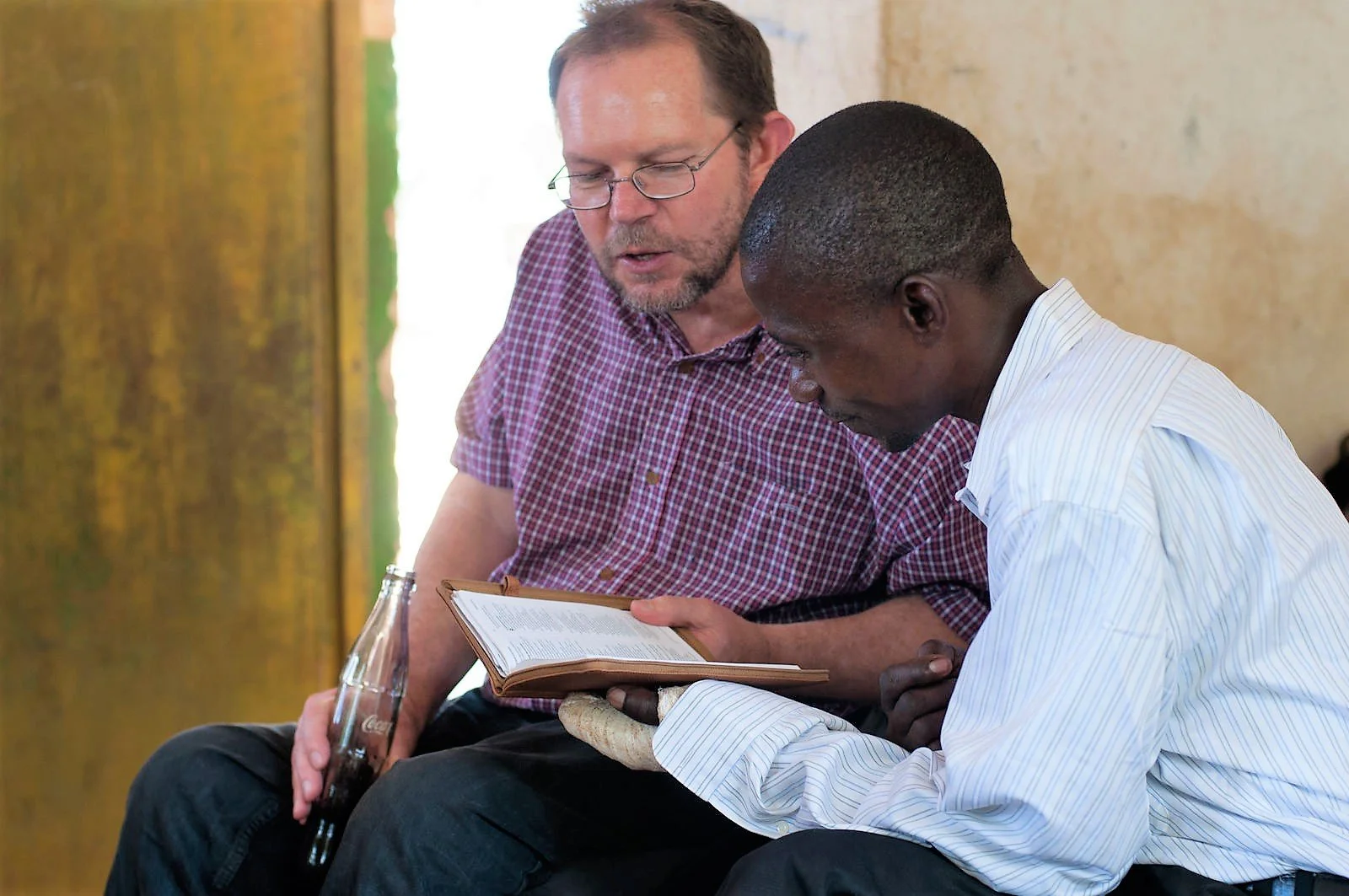
What are the dangers of paraphrasing, and when is it ok to do it? Paraphrasing is not ok. We should only communicate what the original author intended and nothing beyond. But in the example above with the word ‘synagogue’, using a descriptive phrase such as ‘house of prayer for the Jews’ is not a paraphrase, but communicates the meaning, so that is ok.
How does the thought-for-thought translation style TWFW use help with this? The thought-for-thought, or meaning-based style of translation, is essential to make a translation clear and readable. In Mark 1.4 the Greek text says ‘John preached a baptism of repentance for the forgiveness of sin’. This is very complex and can be unpacked by converting the nouns into event words as the Good News Version does: ‘John told the people, “Turn away from your sins and be baptised, and God will forgive your sins.”’
How has AI changed/helped this process? What are the dangers of it? AI helps with consistency of spelling, punctuation etc, and drafts a text with great speed. It also quickly learns the grammar and vocabulary of a language especially if an entire New Testament exists in the receptor language. It can use this as a basis to draft books of the Old Testament. It does however need to be fed the new vocabulary used in each OT book by the different authors.
Translators need to rather use the AI draft as a reference text and do a deep study of each verse by using the NIV, Good News, Greek and Hebrew source texts and study handbooks and tools to discover the meaning for themselves, and then transfer the meaning (and not the words) into a natural way in their mother tongue. AI can learn from them and then improve its ability to draft, rather than the other way around.
Can you explain how community testing works and what the advantages of doing this are? How does this process help with clarifying nuances or finding the right idiom? Community testing is the process of taking a translation of a passage into the community and checking the quality of that translation by reading it aloud in the community or asking one of the members in a group that gathers to read it aloud. The team then ask short questions based on the passage to see if they understand what they are reading. The team might ask questions like, “Did this phrase make sense? Does this word feel natural?”, or maybe they suggest another phrasing. The idea is to get feedback that's immediate and grounded in real listener comprehension rather than just grammar on paper. It's very useful in communities where the language is shared but dialects or idioms differ.
What are the benefits of using native, mother-tongue translators for Bible translation? The benefit is that they have a natural intuition for their language, grammar, nuances and intonation etc and this produces a more natural and accurate translation with adequate training and resources.
How great is the need for native, mother-tongue translators? The need is great as only 10% of the 7400 languages spoken worldwide have a full Bible, and only 35% of them have a New Testament. There is a lot of work in progress, but still a huge task to train more translators to finish the full Bible in every language, which is the vision of TWFTW.
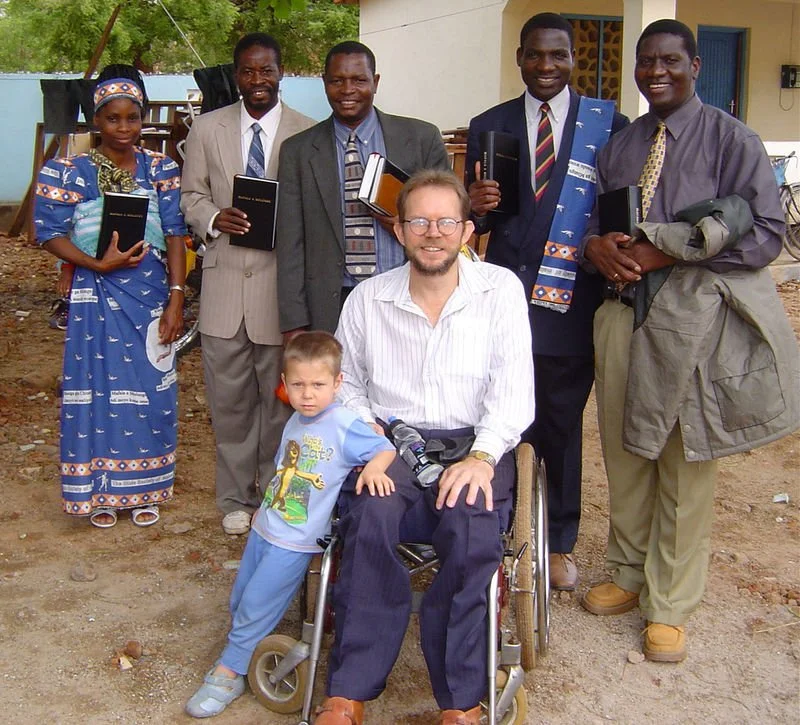
The Blessing of Heart Language Bible Translation
Having mother tongue Bible translators is vital to clear and reliable Bible translation, and we have seen such positive results from our approach of anchoring Bible translation within the community. During a recent community testing session, one community member called Kaba read several Bible passages in his mother tongue for the first time. The passage from 1 John 4 verse 8 caught his attention: ‘Yewa kadji na buswe kamuyukile Leza, pa mwanda Leza I buswe’ (‘Whoever does not love does not know God, for God is love.’ – GNT). Understanding this passage in his own language helped him grasp God’s love more clearly. He started attending church more regularly, praying and meditating on God’s Word. Kaba testified, ‘Reading the Scriptures in my own language makes the message of the Gospel more alive, personal, and directly applicable to my daily life.’
As Barry Funnell shared, there is amazing progress being made in translating the Bible into people’s heart languages, but there is also still a very long way to go. Over 3,000 languages still do not have access to God’s Word in their heart language. Our vision is to be instrumental in translating the Bible into 1000 heart languages who have never had Scripture before, by 2050.
There are many challenges as we carry out this work – and not just idioms – but persecution, the need for funding and the need for translators - and as we continue to develop the skills and strategies needed to accurately translate God’s Word, we would love your support. This would allow us to help train, equip and support more mother-tongue translators, so that one day everyone will have access to the Bible in their own language, and be able to read of their Saviour’s great love for them.
If you feel moved to join us in this mission, please click here.
“Grassroots demand is growing rapidly as communities witness the transformative effects of Scripture; strengthening faith, supporting learning, restoring dignity, and bringing hope into daily life. Over the past 45 years, God has grown TWFTW from a single project to hundreds of Bible translation projects. Before us now stands a significantly larger season of responsibility. The demand is real. The indigenous-led model is effective. People are being equipped. We have the capacity to meet this demand, and funding will determine how fully and how quickly we can respond. Thank you for every prayer, every gift, and every partnership as we continue to press towards the day when Scripture exists and Jesus is known among every language community.”
