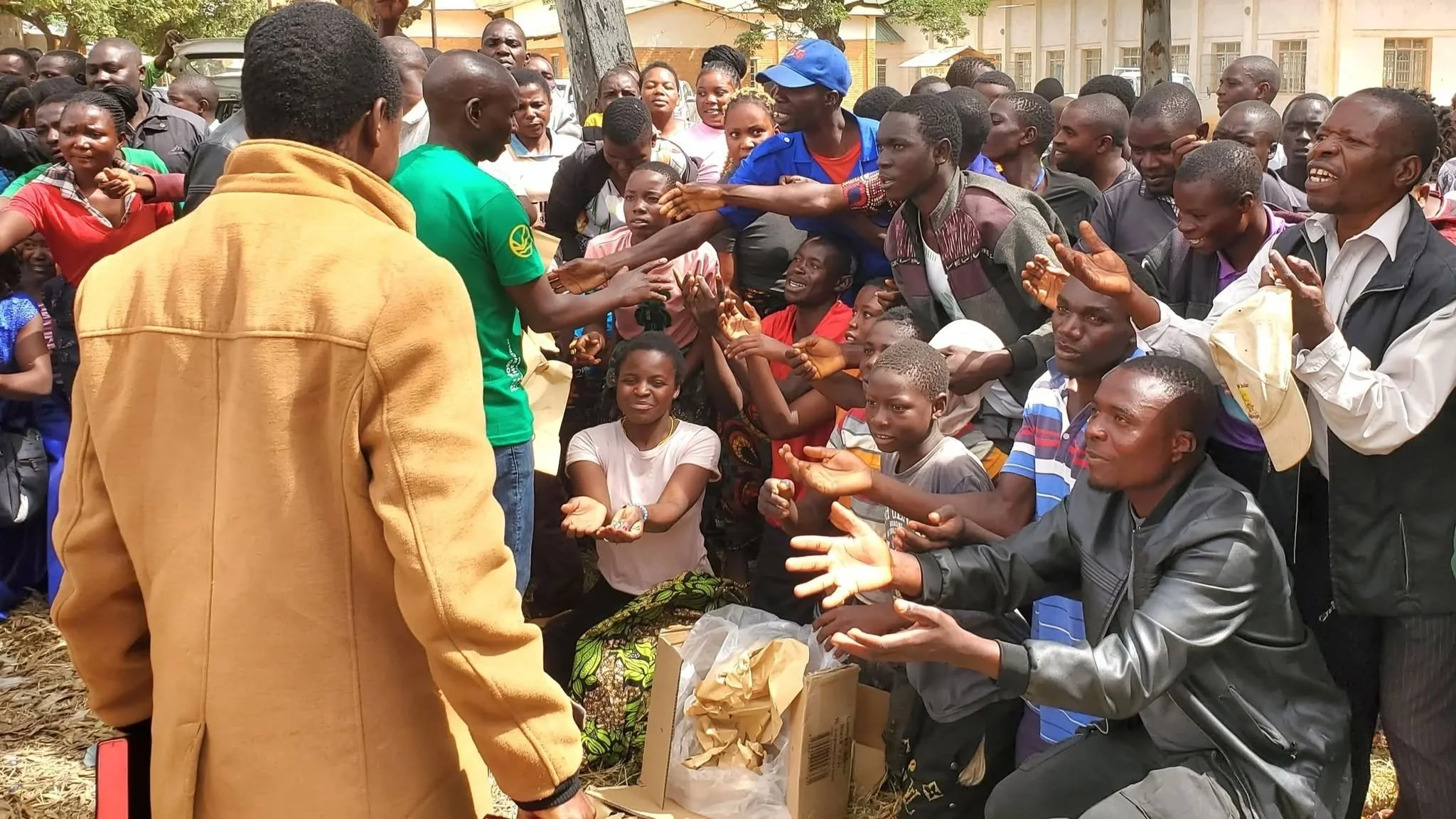
How many times has the Bible been rewritten, and can we still trust it?
A brief word from us before you read: The Word for the World is dedicated to ending Bible poverty by empowering indigenous communities to lead their own Bible translation projects. Our mission is to ensure that everyone can experience the power of God’s Word in their own heart language. If you share our vision of a world where every nation and tongue has access to the Bible, we invite you to support this mission through your prayers and giving.

Addressing the misconceptions around rewriting the Bible
We’ve all played Chinese whispers, haven’t we? A chosen phrase, passed from one person to the next, gradually becoming more misheard and more ludicrous as its journey lengthens. By the time it has been passed to the final person, it’s almost laughable how far the words have been misunderstood and distorted.
There is a common misconception that this is what has happened with the Bible. Many wonder if God’s words, although written down correctly, have then been rewritten, misinterpreted and transposed poorly into many other languages to the point where we are very far from the original source material.
So just how many times has the Bible been rewritten?

Translated Beyond Measure: How many times has the Bible been rewritten?
To rewrite means to write something again, changing the original text to try and improve it, correct mistakes, or add information. To translate means to convert the same words from one language into another as accurately as possible. To this end, the Bible has never been rewritten, but translated, many, many times.
This is why the answer to the question ‘How many times has the Bible has been rewritten?’ has no numerical answer, as the text has never been rewritten from scratch. Instead it has been carefully translated into over 800 languages, making it the most translated book in human history! Partial Scripture, including the New Testament and individual books of the Bible have been translated into over 3000 languages. And while it might seem hard to believe, there are over 900 English versions of the Bible.
So, do the staggering number of translations affect the reliability of the Bible?
“People on the street often raise the objection that “the Bible has been translated so many times that there is no way to know what it originally said.” This, however, is exactly opposite the truth! The Bible has indeed been translated many times over the centuries. It is the most translated book in the history of man. The problem with the objection, however, is that this does not in any way undermine the reliability of the Bible.”
Translations, not rewrites: Why we can trust the Bible
When we are presented with evidence, we want to know how trustworthy it is, don’t we? In the case of textual historical evidence, we would want to know how closely time stamped it is to the original, and how many copies there are of it. Both would allow us to assess the accuracy of it.
Tactitus’ ‘Annals of Imperial Rome’ is one of the chief historical sources for the Roman World. It is trusted and well-referenced. It was written during New Testament times but there are only two surviving copies of this work, both dating from the Middle Ages, many hundreds of years after the original was written.
In contrast, there are about 5,686 Greek manuscripts of the New Testament and over 19,000 in Syriac, Latin, Coptic, and Aramaic. This makes nearly 25,000 manuscripts, and some of them date to within 100 years of the originals. Perhaps most excitingly of all is a small portion of the gospel of John found in Egypt in the mid-twentieth century, dated 114AD, showing that it had circulated as far as Africa, just forty years after it was written. By all standards of ancient literature, there is an solid case for reliability.
However, there has been the concern raised that having so much source material available means that there are a huge number of variants, making it virtually impossible to reconstruct the originals. But the opposite is true: having increasingly more contemporary source material uncovered in the original Hebrew and Greek means that Bible translations are becoming ever more accurate. We can have confidence in the translations as there are no major missing parts needed to be replaced.
“Scholars estimate that about 99% of the New Testament text is firmly established, and the remaining variants are mostly spelling differences or word-order changes. Not a single core Christian doctrine rests on a disputed passage.”
How Many Times have The Word For The World translated the Bible?
We are thankful to God that we can translate the Bible with confidence. In 1979, our founder Dr Veroni Kruger heard God say, ‘I want you to establish an indigenous Bible translation agency whose vision will be empowering nationals to translate the Bible for their own people.’ With a recruited team of driven translators, that is exactly what he began to do.
The Word for the World currently have over 450 Bible translation projects underway all across the globe. And the field is widening – we now have 70 sign language and oral Bible translation projects taking place. We have also established 178 orthographies (the writing system for a language, including spelling and punctuation) for languages that have never had one before.
These numbers seem encouraging – and are encouraging – but there is a long way to go. We may have 400 Bible translation projects taking place, but there are still over 4000 languages, encompassing 1.5 billion people, who have no access to Scripture in their own language.
“Over the past 45 years, God has grown The Word for the World, beginning with a single project, to now hundreds of Bible translation projects. Before us now stands a significantly larger season of responsibility. The demand is real. The indigenous-led model is effective. People are being equipped. We have the capacity to meet this demand, and funding will determine how fully and how quickly we can respond.”
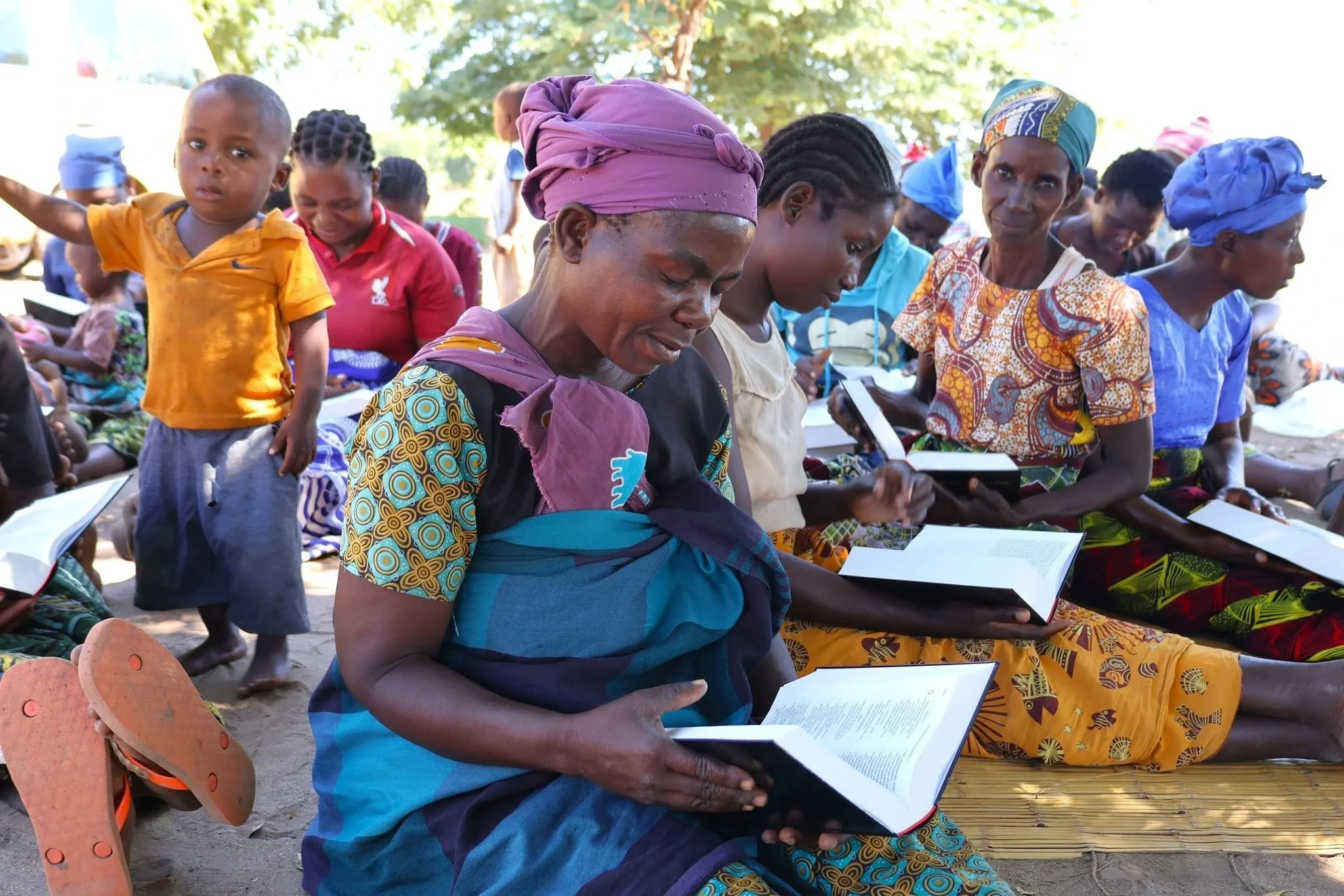
The Life-changing Results of Bible Translation in our Heart Language
The gospel has always changed lives. From the Ethiopian eunuch, to Paul and Silas’ jailor, and the Samaritan women by the well, hearing and accepting the gospel is transformational. And just as in these cases, we know that it is having the Bible in your mother tongue that is pivotal. You need to be able to read it, or hear it, in a way that speaks to your heart directly. It should feel like a friend is speaking to you, rather than it being hard to understand and decipher.
In order to achieve this, we use the people who know the local language best to translate Scripture: the indigenous community members. They can identify the dialect where the language is spoken best, and are trained by TWFTW in exegesis, linguistics, and translation theory. Community testing is used to assess the naturalness and community acceptability of the translations, and a theological consultant ensures accuracy and faithfulness to the source material.
TWFTW’s conviction is that the Bible, when accessible in people’s native tongue, can profoundly resonate within their hearts, opening the door for genuine transformation and connection.
We received this testimony from one of our teams recently:
“Mr Laba was unable to read the Bible because it was not available in a script he could read, and he did not understand English. However, after the New Testament became available in his own language, written in a script familiar to him, he began using it for personal devotion and church services. As a result, his spiritual life and understanding of the Lord have deepened. He now reads the New Testament daily and has started sharing the gospel with his friends. He is very happy to have received the New Testament and eagerly looks forward to the completion of the Old Testament.”
To The Ends of the Earth: The Work is Not Complete
God’s Word has not been rewritten despite the huge number of translations over the years: it has been carefully translated many times, and remains a powerful double-edged sword that changes lives. But despite the Bible being the most translated book in history, we need God’s people’s support to put God’s Word into the hands of those who are still waiting for translations in their heart languages.
Bibleless places are being transformed as God’s Word begins to shine. For the first time, people can encounter the life-changing power of Scripture in forms they can use, but we need your help to reach the 1.5 billion people still waiting for Scripture in their heart language. Click here to support our work and help bring God’s Word to life among people not forgotten. We look for the day when every people, tribe, nation, and language has the complete Bible, and no more translations are needed.