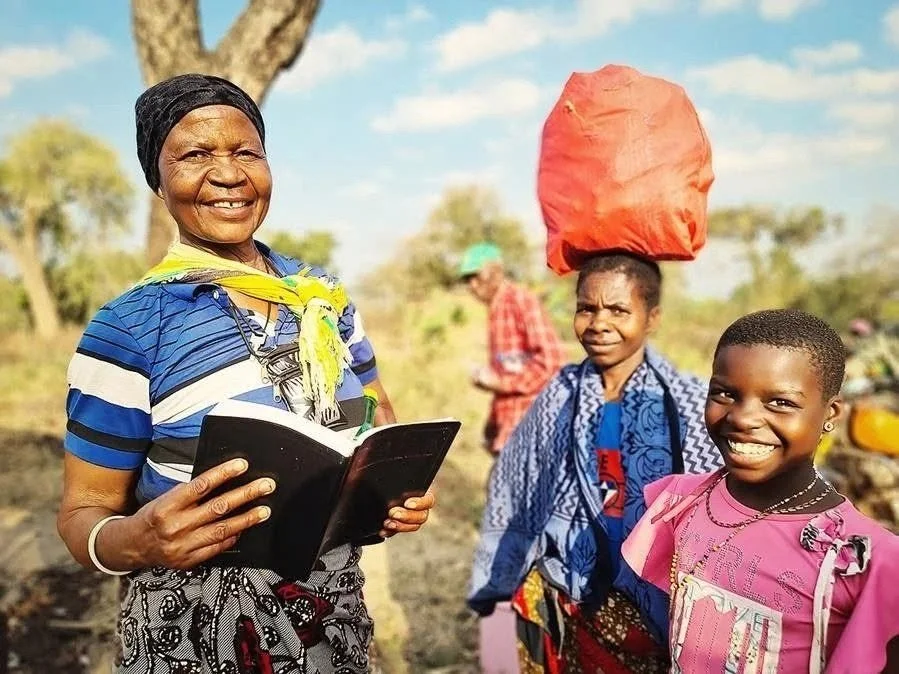
A brief word from us before you read: The Word for the World is dedicated to ending Bible poverty by empowering indigenous communities to lead their own Bible translation projects. Our mission is to ensure that everyone can experience the power of God’s Word in their own heart language. If you share our vision of a world where every nation and tongue has access to the Bible, we invite you to support this mission through your prayers and giving.
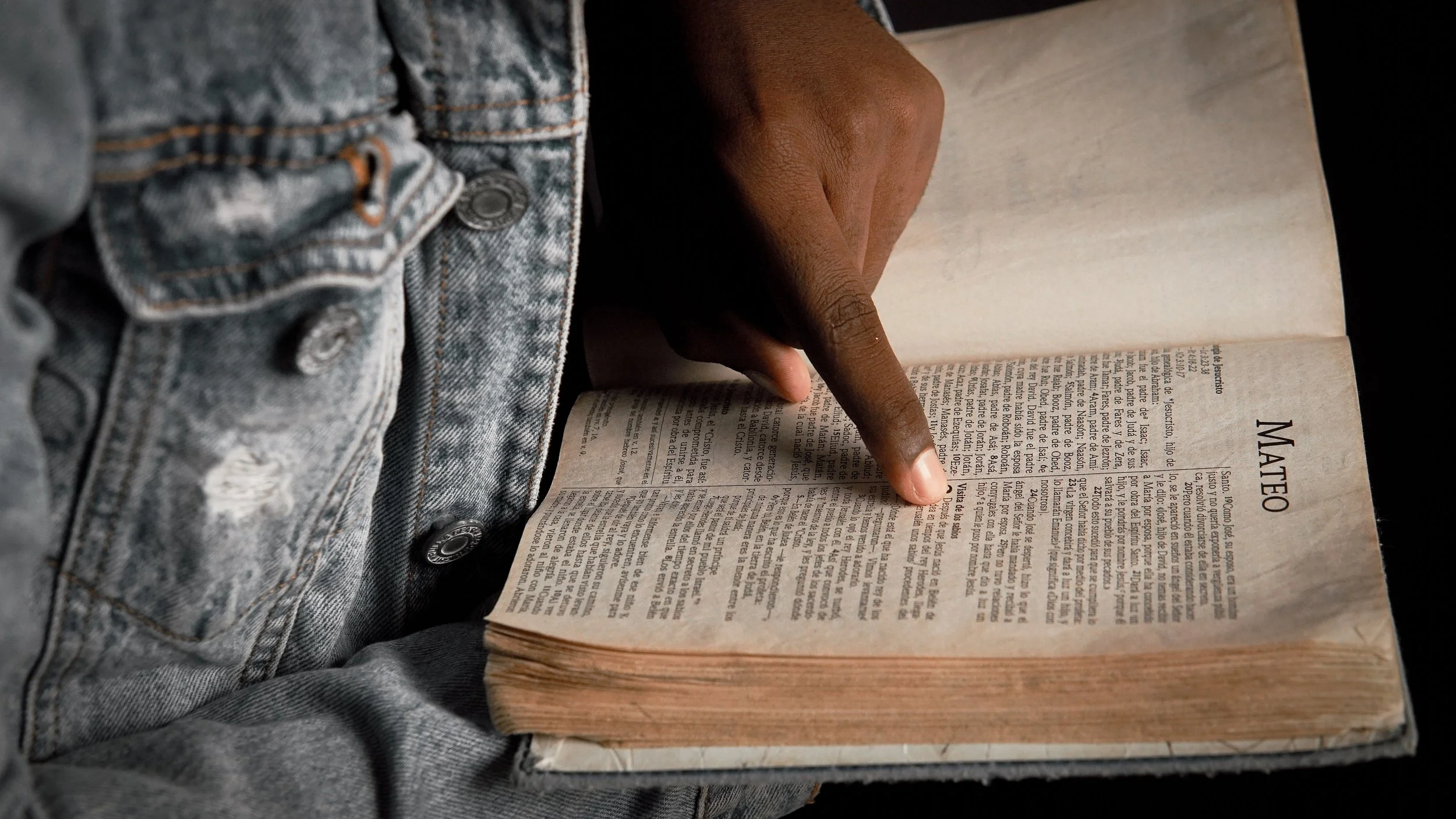
Is Bible Translation Still Important Today? A Biblical & Global Response
Many of us will know the stories of John Wycliffe and William Tyndale who devoted their lives – and, in the case of Tyndale, gave his life – to ensure that the Bible, originally written in Hebrew and Greek, was translated into common English. Indeed, a more pressing concern for us may be which translation to choose from, as we now have over 900 English versions available! Do you enjoy the easy-to-read thought-for-thought NLT, or the more traditional word-for-word KJV? And with so many options available to us, is Bible translation as relevant or pressing as it once was?
Despite how it may appear in our Western world, Bible translation remains critical today. While we have hundreds of English translations at our fingertips, 1.5 billion people have none. Today, over 3,000 languages do not have the Scriptures in their heart language, the language they understand best.
Bible translation is important because it fulfils the Biblical mandate to ‘make disciples of all nations’ (Matthew 28 verse 18). If people do not know about God’s saving grace, they cannot turn to him, and this is why we must fuel Bible translation, enabling God’s gospel to be translated into people’s mother tongues, allowing for personal and community transformation.
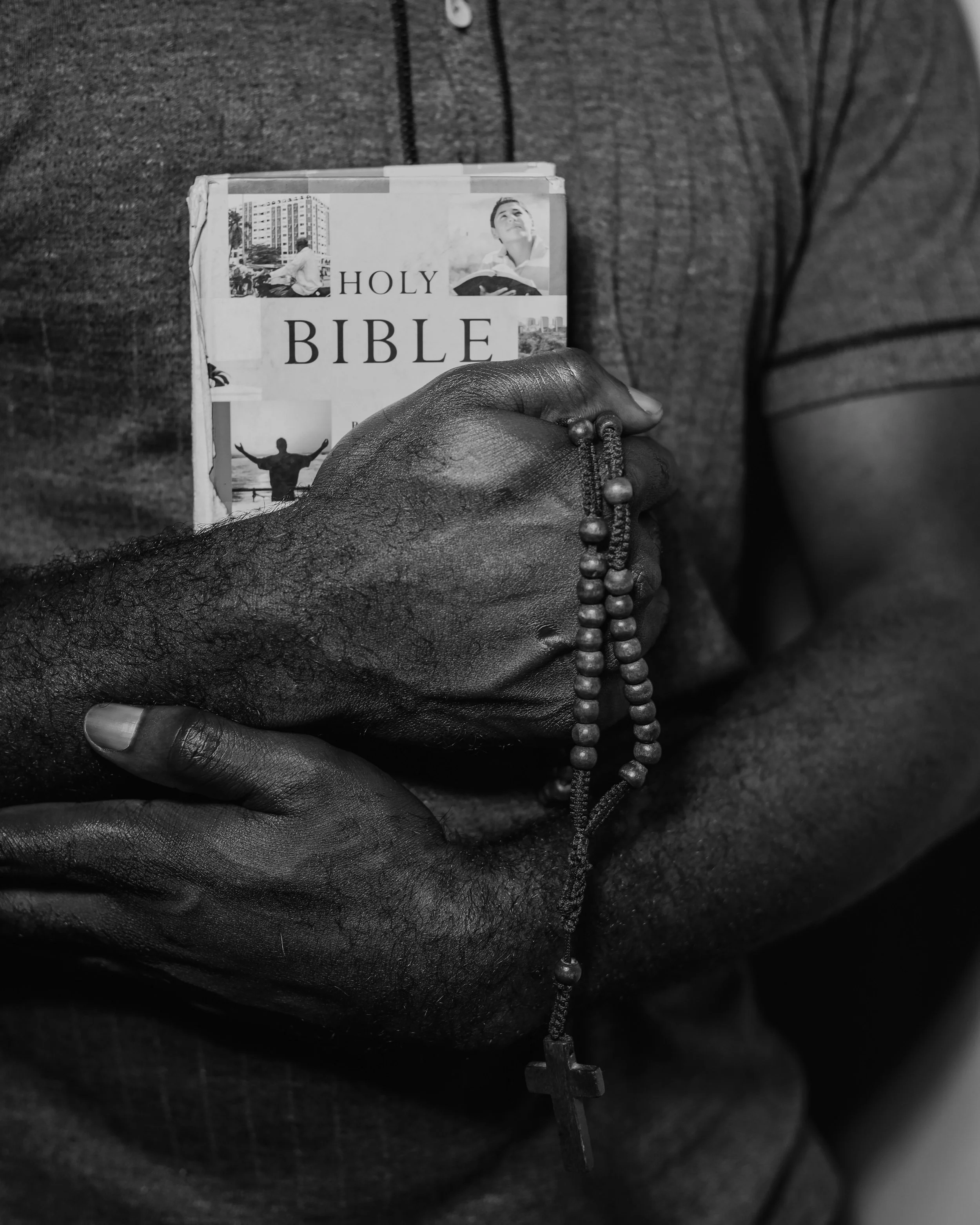
The Biblical Basis for Bible Translation
Translation and language are key themes throughout the Bible. Genesis tells us that, in the very beginning, God ‘spoke’ our world into being, showing that our world is word-based, written by an intelligent author. God gave the gift of language to Adam and Eve, allowing them to communicate both with each other, and with him, as they were made in his image. And when humanity had fallen so deep into sin that they were considering how they could make themselves greater than God by building the tower of Babel (Genesis 11), God’s curse upon them was the origin of multiple human languages and the fragmentation of cultures.
We also see the vital importance of translation in key passages such as Esther 8, when King Xerxes decrees that the Jews were now allowed to protect themselves from the terrible attack planned by Haman:
‘At once the royal secretaries were summoned… They wrote out all Mordecai’s orders to the Jews, and to the satraps, governors and nobles of the 127 provinces stretching from India to Cush. These orders were written in the script of each province and the language of each people and also to the Jews in their own script and language… [they were] sent by mounted couriers, who rode fast horses especially bred for the King.’
Esther chapter 8, verses 9-10
If this message did not reach the right people in time, many lives would be lost, so great care was taken to ensure that the orders were carefully translated into the individual scripts and languages of each of the 127 provinces, and then sent on the fastest horses available. Do we consider translating the eternally life-saving Word of God as an urgent task?
Jesus’s Great Commission to his disciples at the end of Matthew Chapter 28 was to ‘make disciples of all nations’ and the best way to enable this is to make God’s Word available to every culture and language. We know from John’s vision in Revelation that all people groups will one day stand before God’s throne, and it is our privilege and challenge, through the power of the Holy Spirit, to help in the huge task of translating the Bible into the three thousand languages who are still awaiting the gospel.
‘After this I looked, and there before me was a great multitude that no one could count, from every nation, tribe, tongue, people and language, standing before the throne and before the Lamb.’ Revelation 7 verse 9

Head Language vs. Heart Language: Why English Isn't Enough
Many people may ask, but surely, with the Bible already translated into English, and main trade languages such as Mandarin, Spanish and Arabic, most people can now access Scriptures?
It’s true that the Bible is available in the most widely spoken languages, but for many people, those languages are second languages. If you learned French, German, or Spanish at school, how easy did you find reading a book in those languages, compared to reading in English? The process is slower, more time consuming, and the words are less clear.
When The Word for the World’s founder, Dr. Veroni Kruger, was asked as to why the Bible should be translated into everyone’s heart language, he replied:
“Travelling in the United States I struggled with this question. After a long day I felt a great need to hear from the Lord. I looked around at the collection of English Bibles my host had very considerately placed on my bedside table. Then I knelt down and rummaged through my suitcase under my bed to find my small Afrikaans New Testament. I sensed it was the Lord that asked me “But don’t you understand English?”
Just there I learnt the lesson: God speaks to us most clearly when He does so in our mother tongue.
The great Church Reformer, William Tyndale, prayed that the Bible should be available and accessible in every language in the world, so as to impact every person”
Nelson Mandela said “If you talk to a man in a language he understands, that goes to his head. If you talk to him in his language, that goes to his heart.” We believe that it is reading the Bible in your heart language that brings true life transformation. We will not settle for giving people the gospel in a language they know some of, but want to give it to them in the language that speaks deeply to their soul.
Helping the Bibleless: The Global Need Today
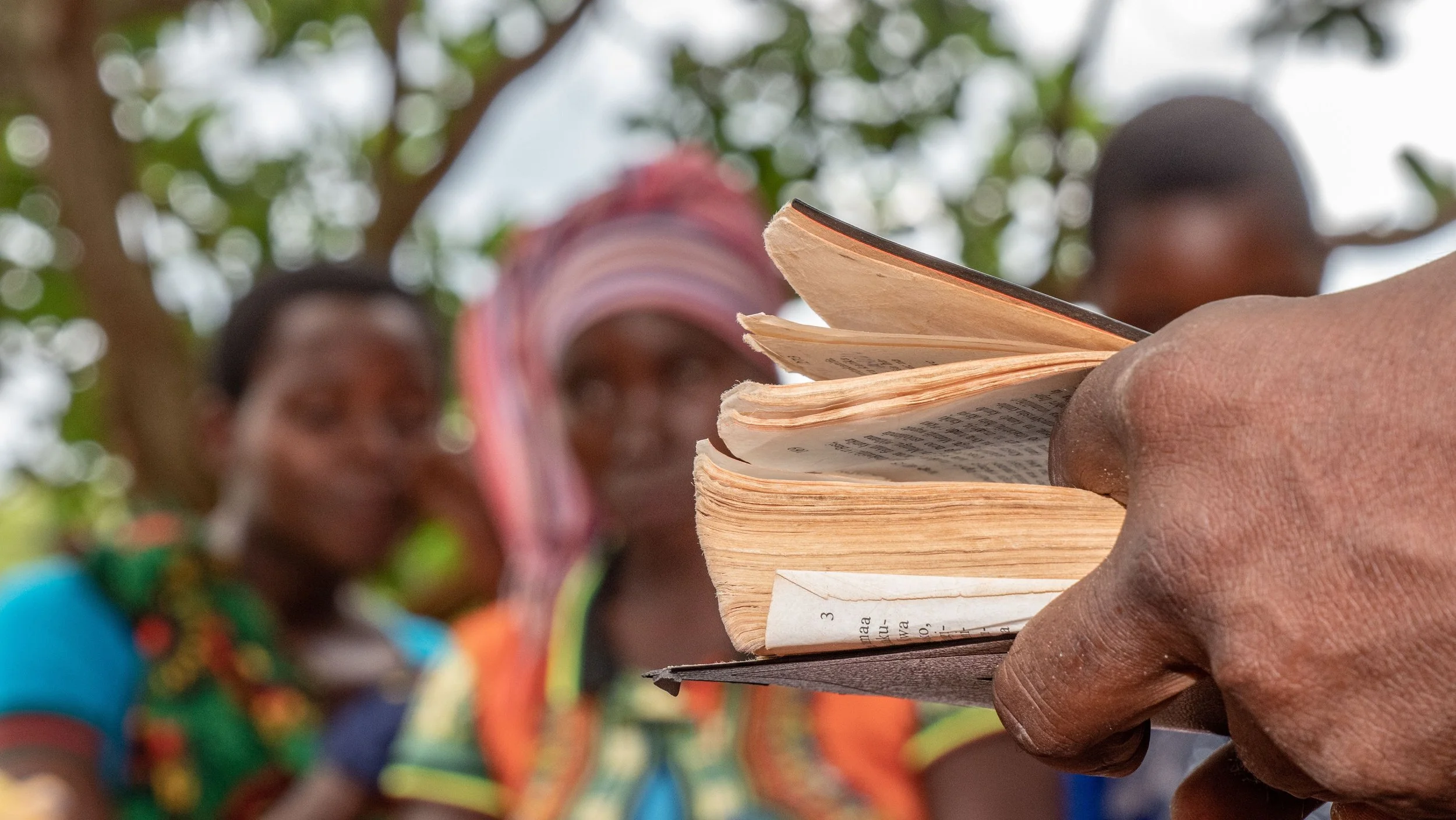
We all know about poverty – whether it is financial poverty, food poverty, water poverty – but what about those who are Bibleless, who still do not have a single verse of Scripture in their language?
Bibleless people in remote and persecuted communities often feel overlooked by God because they believe He does not speak their language. They feel that if he did, they would have the Scriptures in their own languages.
This is not a situation we want to continue. That’s why, since 1979, we have employed an innovative Bible translation approach, empowering nationals to translate the Bible for their own people. Rather than sending in external workers, we work with local communities on Bible translation projects, investing in local communities, providing diploma-level Bible translation training and literacy programmes, and building sustainable translation structures that empower indigenous translators to translate the Bible for their own people. This allows them to make disciples in their own nations, and we work with indigenous teams around the world across hundreds of unreached language groups.
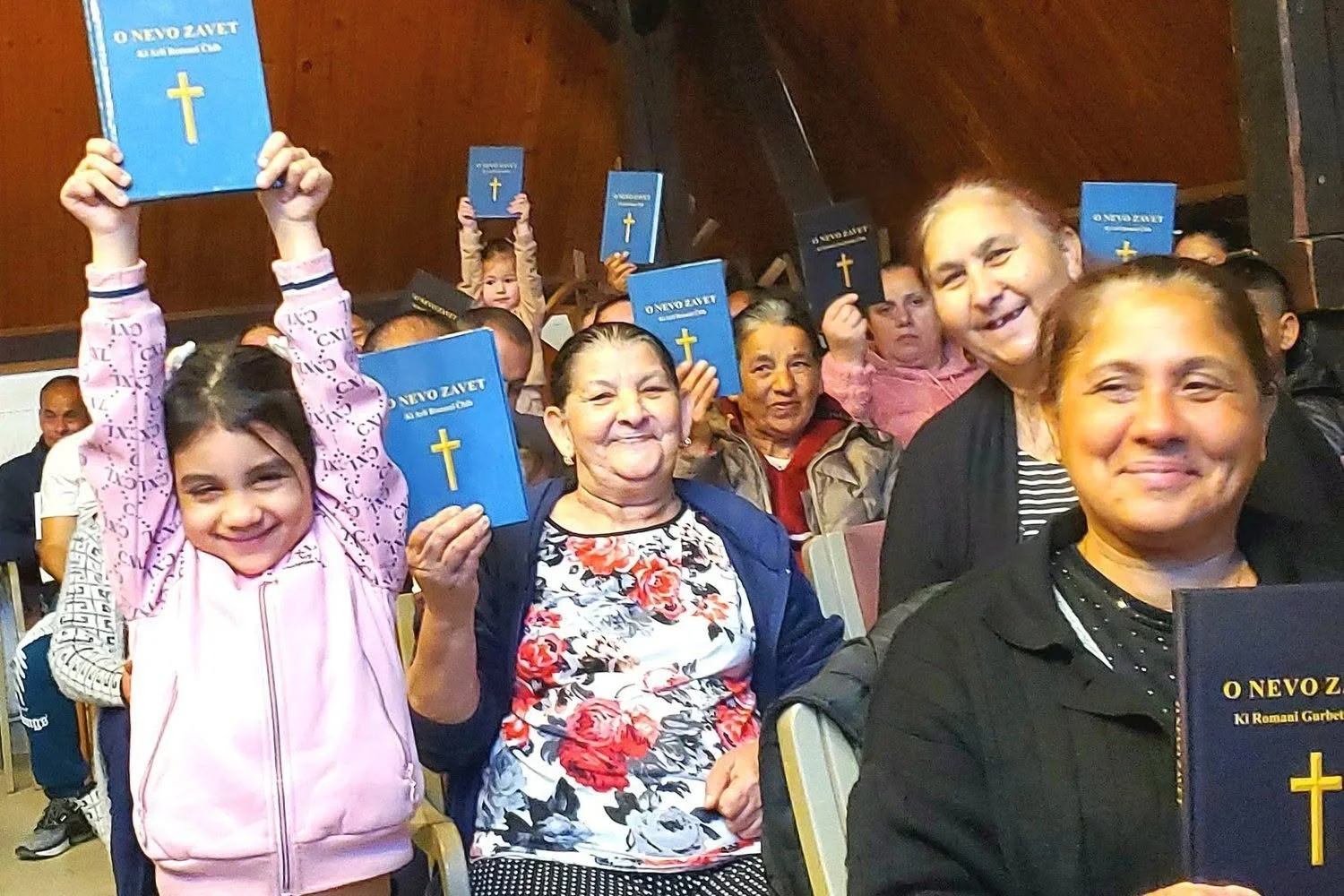
In Eastern Europe we are reaching Europe’s oldest minority group—the Romani people—across Slovakia, Serbia, Croatia, and Albania. Last month we celebrated the launch of the Nkangala New Testament in Malawi to great rejoicing, and we are currently engaged in twenty-one Bible translation projects in the land-locked country of Ethiopia. Our vision is to translate the Bible into 1,000 languages by 2050.
The Harvest is Ready: How you can Support Bible Translation
Jesus didn’t commission his disciples with the huge task of sharing his gospel alone: he promised them his Holy Spirit to equip and empower them. Similarly, we know that the vital Bible translation work we do is not done in our own strength.
We also rely upon our fellow believers to support our work. We could not do what we do without the backing of UK churches and individuals who give generously and pray steadfastly.
But our need is growing. Our indigenous-led Bible translation model is effective and doors are opening, but we do not have the funding to meet the demand. We are having to press pause when we should be sending our ‘fastest horses’.
It is local churches, prayer groups and donors who can play a vital role in enabling this global Bible translation work. Please consider partnering with us by giving here, inviting us to speak at your church to spread the word of the need for Bible translation, or signing up to our newsletter, which will equip you to pray in an informed way about our worldwide projects.
Bible translation is not important; it is crucial. Support us to show every nation, tribe, and tongue that they are not forgotten and that God’s saving love is for them too.
“Why should you support Bible translation? The Great Commission at the end of Matthew 28 tells us to go out into all the word, to teach what Jesus taught, to share what God has said in his word, and I do believe that everyone who is a follower of Christ has a responsibility to be involved in that commission, and supporting Bible translation is being part of the Great Commission.
In the final book of the Bible, Revelation, it talks about there being people from every language group, tribe and tongue standing before the Great Throne Room at the end of time - and you can have a part to play in that. Isn’t it incredible that you can make it possible for someone to read the Bible in their heart language and come to Jesus. You have helped to affect their eternity with Christ. You may never get to meet that person here on earth; you may never even know which project your money goes towards. But one day you may well find out.”