

Bible translation: Keeping it real
Receiving a Bible in your heart language for the first time can be hard for us to imagine. We have had the full English Bible for over 500 years (2026 marks the 500th anniversary of Tyndale’s New Testament), and we have nearly 900 translations and paraphrases of the English Bible available to us! Most of us grew up with a Bible by our bedside, in our classrooms, or in a hotel room drawer, and you can buy one almost as easily as buying a pint of milk (even if it may cost a little more!).
In fact, there are few books we can’t access in English. The concept of wanting to read something and it not being available in our language, is quite literally foreign to us. So, we appreciate that when we ask for support in translating the Bible, it can feel like quite an abstract request – especially when huge figures are quoted: there are over 1.5 billion people waiting for Scripture in the 3000 languages that still do not have translations of the Bible.
So, we sat down with the UK Director of TWFTW, Steve Lancaster, to help bring it to life for us. We wanted to find out first-hand what it’s like to put newly-translated Bibles into the hands of those who have been waiting their whole lives for God’s Word in their heart language.
What’s your favourite part of attending a Bible launch?
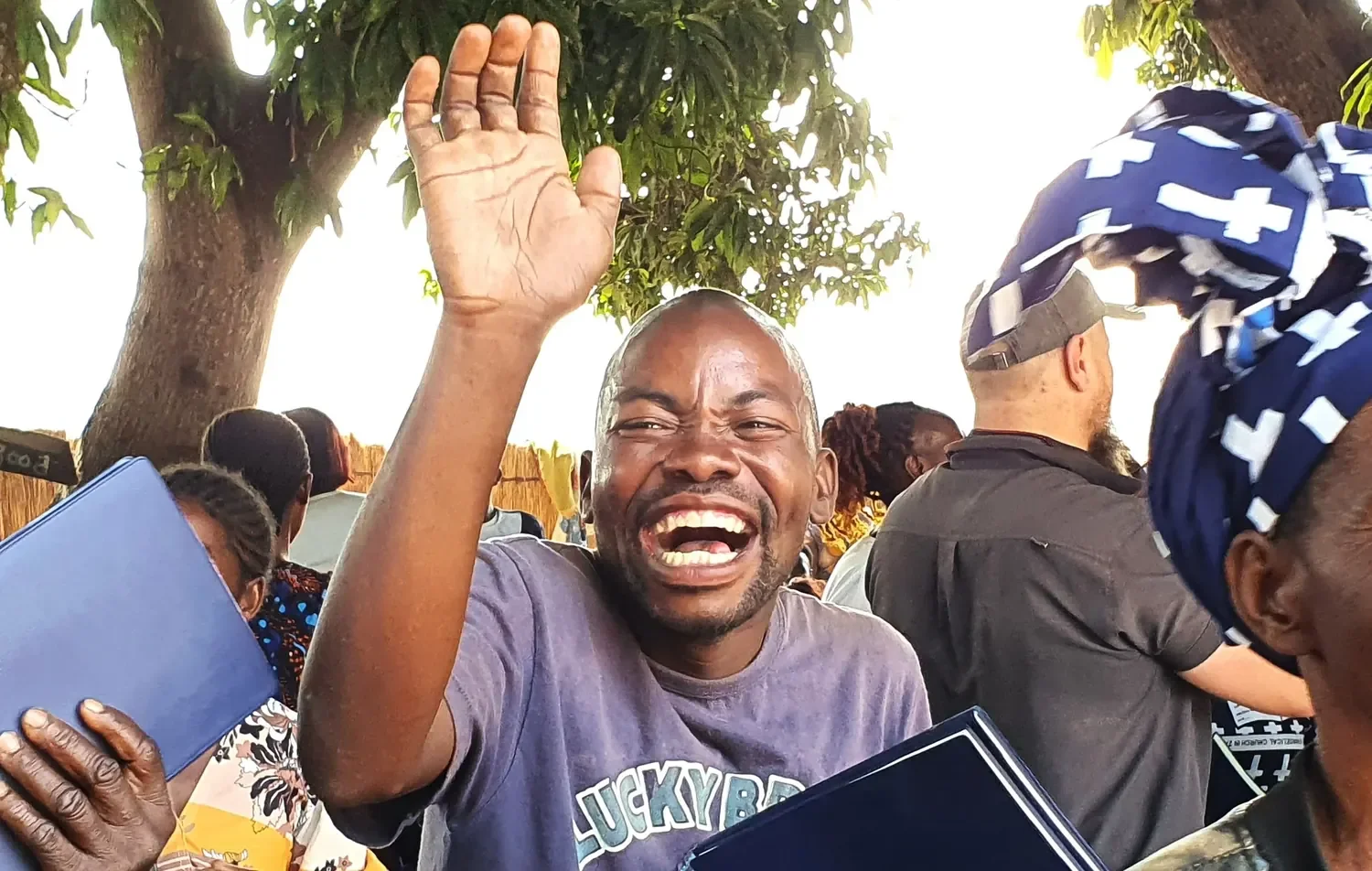
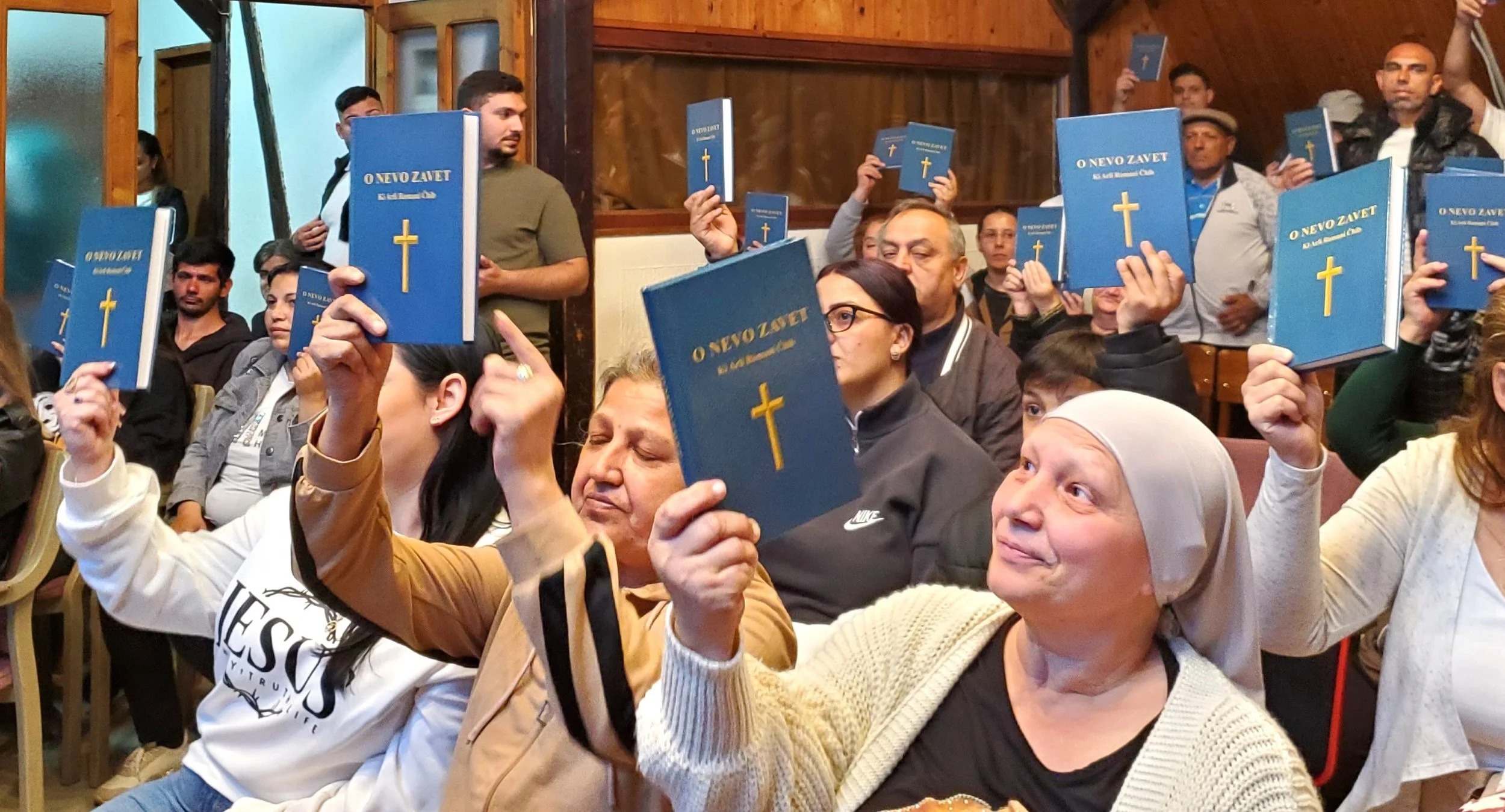
My favourite part of attending a Bible launch is the moment when the Bibles or the New Testaments are distributed. People are often waiting for four or five hours for that moment when they can own their own copy. The Bibles are given out, and the faces of the people receiving them are usually those of great joy.
What is your experience of the Bible launches that you have attended?
I remember the first launch I attended in Slovakia. I was introduced to the Roma people, where they lived and where they worked (or didn’t work), the amount of poverty that there was, and the fact that they lived on the margins of society. They are marginalised people, but to see the Christian Roma community receiving their Bibles and the huge lift that it gave them was amazing. There was a real sense of, ‘Do you know what, we might be a marginalised people, but we now have God’s Word in our own language!’.
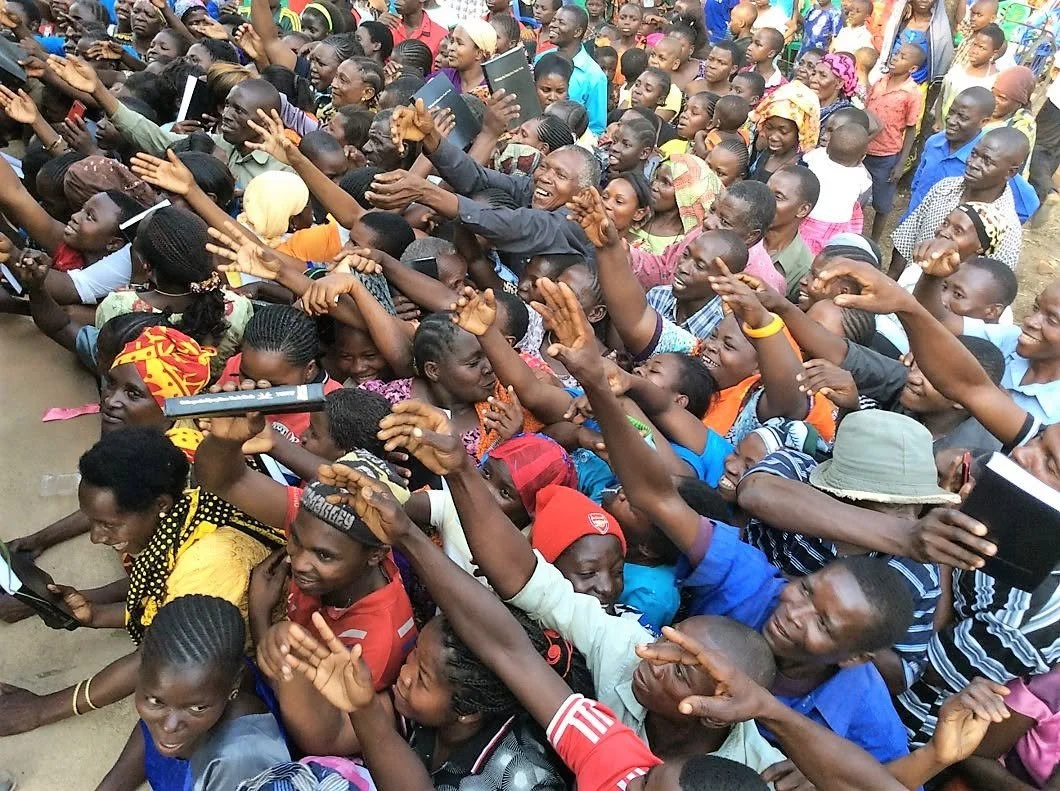
It was very different to the Lambya launch I attended this year, where there was so much pushing and shoving and a desperation to get hold of God’s Word. It is great to see that desperation, but it is also sad as they have had to wait so long.
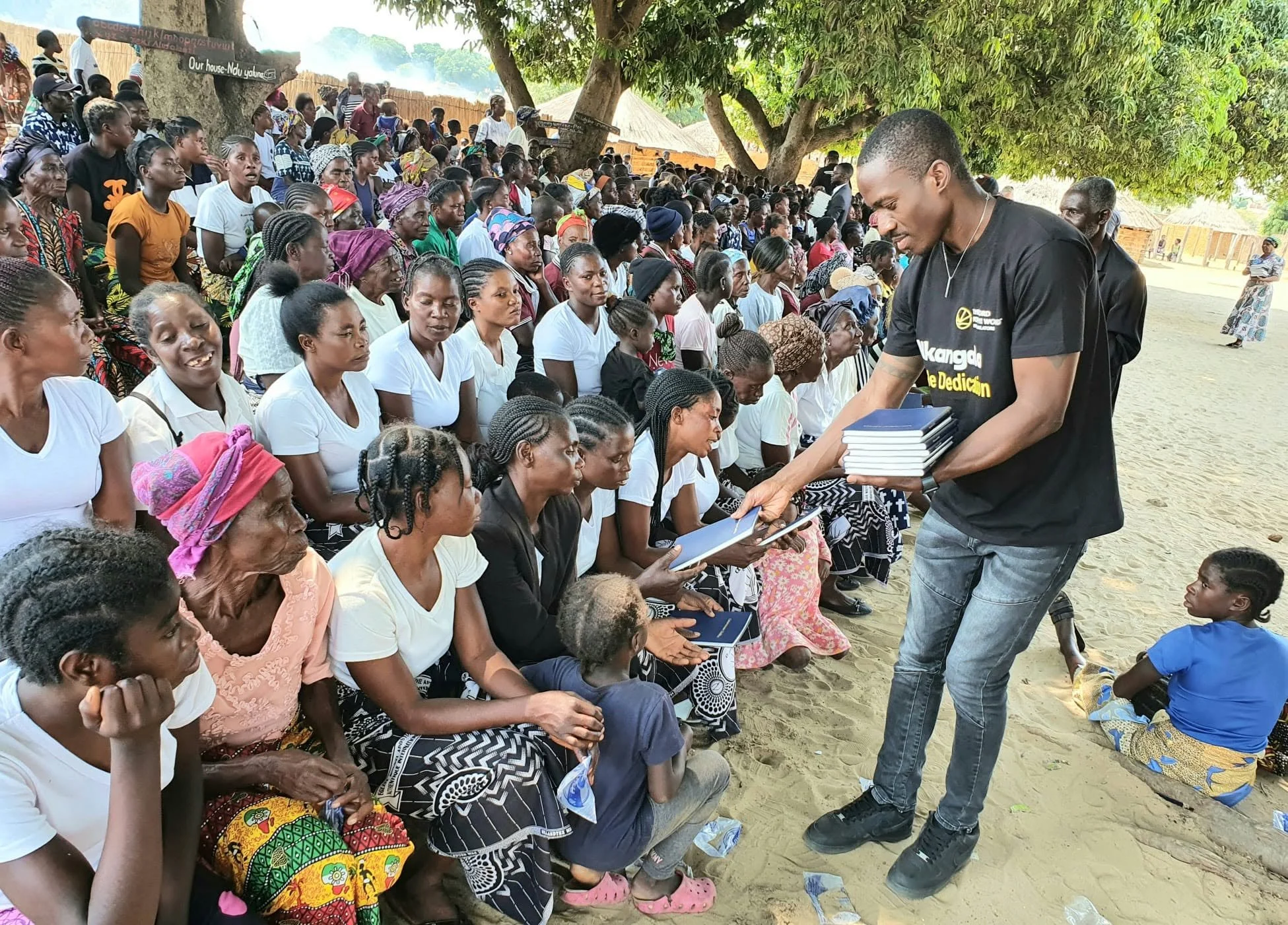
The launch in Zambia recently was also very different – it was another African launch, but everyone there was seated patiently on their wooden benches; there was no pushing and shoving, and yet there was still that anticipation.
So, it’s different depending on where you are. I haven’t yet attended a launch in South East Asia, but I’ve seen photos and videos. These are very different types of launches because of the security situations in those countries; there is that solemnness, as well as that joy at receiving God’s Word.
Why do you enjoy being able to attend Bible launches?
For me, sitting in the office most of the time, or being on the road here in the UK, you feel very distant from what’s happening on the ground, so to be where the action is, and to see the final result - and sometimes this is years after the translation projects have started - to be there in that moment is quite something.
And to see the translators, who at these launches are honoured and thanked, for them I’m always thinking, ‘what must this feel like for them?’ The Lambyan Bible took 21 years to translate, so to work for that long on a project and see it completed, and the Bibles handed out must bring a huge sense of satisfaction.
Last year you had the idea to do the ‘Sinai for Sena project’ – what prompted you to do that?
That idea came out of the Lambyan full Bible launch in Malawi. It took place in the north of Malawi, but pastors from the Sena tribe in the very south of Malawi came up to celebrate the launch of the Lambya Bible. While we were there, they took us aside and thanked us for producing their Sena Bible back in 2006. But they said that they had now run out of their stock of Bibles. Buildings and structures in Malawi are certainly not as substantial as they are here and the storehouse that they had used was destroyed in a cyclone, so they lost a couple of thousand copies of Bibles. So they came to us and said ‘we’ve run out of Bibles. We can’t provide our churches with Bibles, but we also can’t afford to have them reprinted.’
So that got me thinking, maybe I need to do a sponsored event. And there is also the adventurer in me that likes to do such things, like climb mountains. I’d spent quite a bit of time in Israel and visiting Biblical sites is a huge highlight for me, so I thought, ok: mountains… Biblical history…. let’s go and climb Mount Sinai in Egypt! So that was how it came about, and the whole project worked unbelievably well. From start to finish it could not have gone better. We raised far more than we hoped to raise and we were able to provide 10,000 Bibles at the beginning of 2026.
What was it like being part of the team who distributed the Sena Bibles that the project funded?
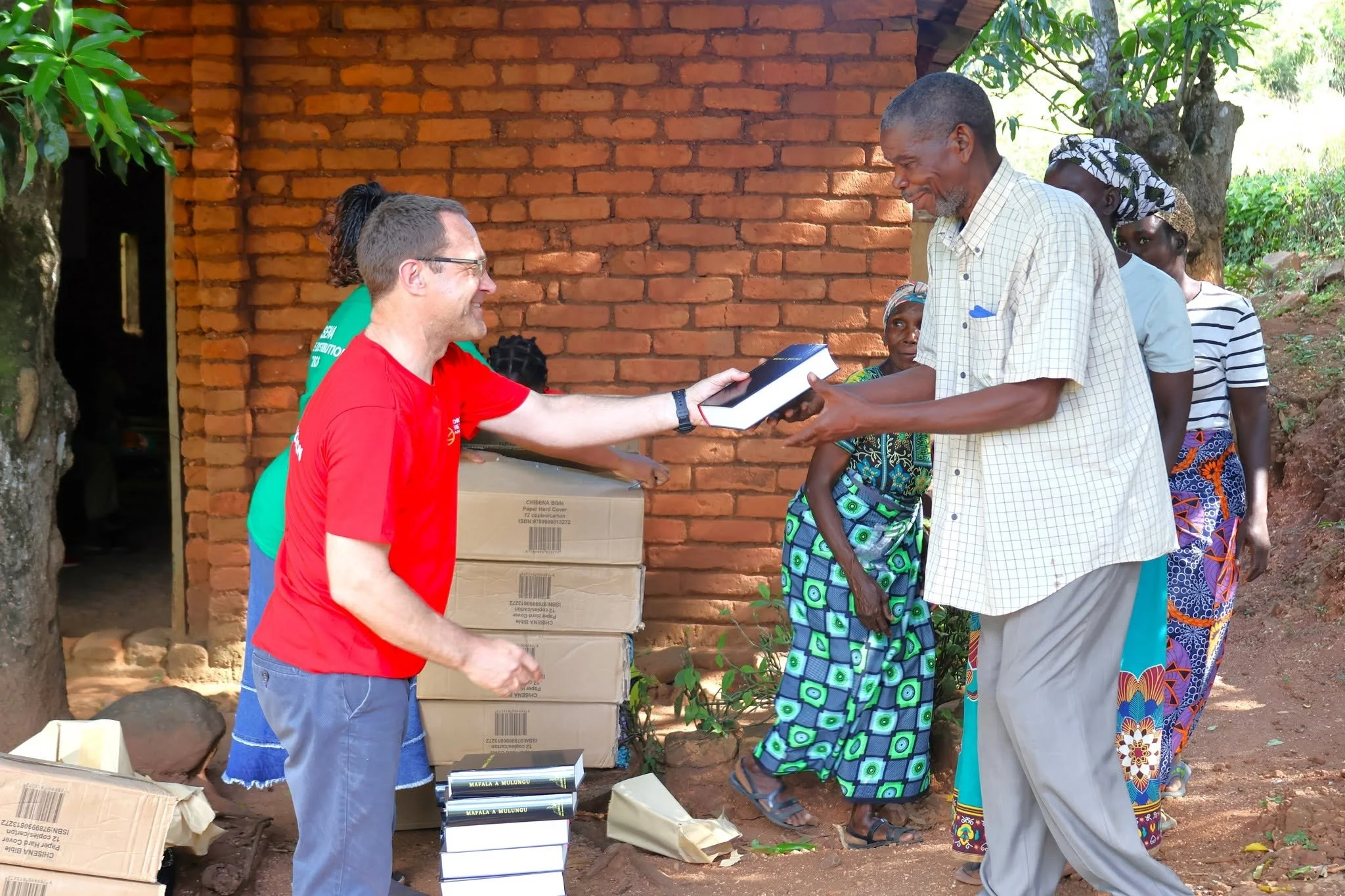
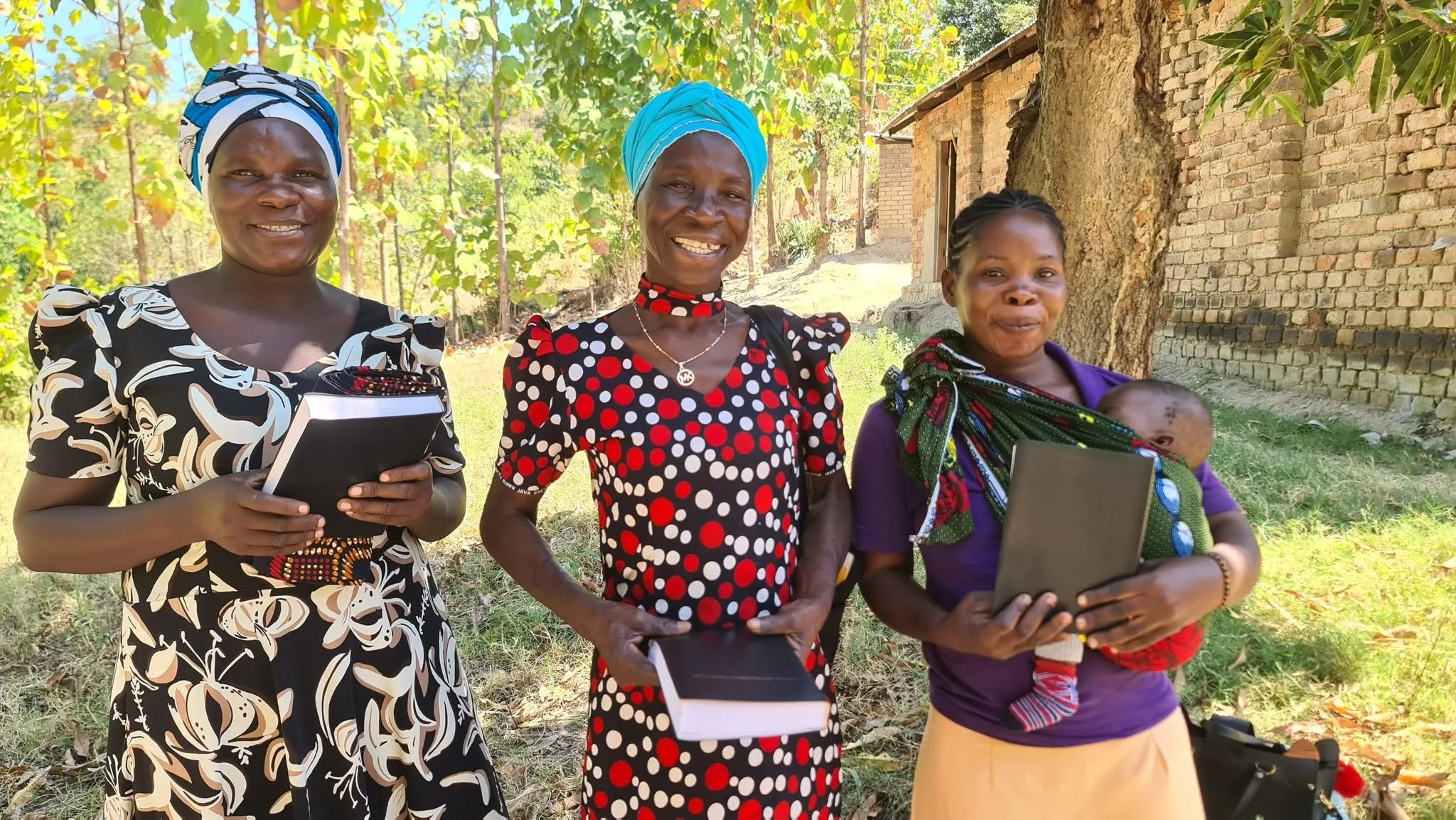
Being able to go back to Malawi and be involved in the distribution of those was quite precious. People were gathered under trees; we visited mud-brick churches and found people queuing up for a Bible with anticipation on their faces, and then walking away with it as if it were the most precious item that they owned.
We went to a church in Blantyre where there was a choir practising, and a number of the ladies in this choir were Sena people, so when we presented these Bibles there was a lot of what you call undulating – a sound that the women make when they are full of joy. It sounds like a kind of shriek – but then they burst into song and were holding up their Bibles and dancing with them, and again it just brings it home as to how important it is for people to have a Bible that they can fully understand in their own language.
We had to walk to one church with boxes of Bibles on our heads as there was no road to the church itself. It was a mud brick church, which was quite dark inside, but as we entered we found a group of women who were dancing and singing, just full of celebration at receiving a Bible in their heart language.
Another highlight was back in Nsanje, at the guest house that we were staying in. We were having breakfast one morning and one of the waitresses came over, a girl in her late teens. We began talking to her, and learned she had come from one of the villages we had been to the previous day - but she hadn’t been there when we went to distribute Bibles. So I got her a Bible and she went back to her position behind the reception desk, and straightaway she got on her phone to call a friend; you could hear and see her excitement. I thought, would that happen here in the UK? We are so used to having Bibles we can understand and read, but here was a girl who hadn’t had a copy of the Bible in her own language before: now she had it, and she was straight on the phone to say, ‘Look what I’ve got!’ So that was a precious moment. It was full of moments like that.
What does it mean for people to receive God’s Word in their heart language?
At a Roma project in Serbia, a woman in her mid-forties came to the team after reading sections of the New Testament. She had accepted Christ the year before, but she had been in conflict with a particular woman in her neighbourhood who was not a believer. The woman’s natural inclination was to retaliate, and so there was conflict going on. When she was given her translated copy of the New Testament, she started reading Matthew’s gospel in the Gurbet dialect. She read Matther 5 v 38-48, and as she read it in her heart language it hit her like a tonne of bricks that she needed to be able to forgive this woman, even though the conflict wasn’t her fault. She had read those verses many times in the Serbian translation, but in that moment, when she read it within her heart language, it really sunk in, and she was enabled to forgive this woman that she had had conflict with.
What is the effect of reading God’s Word in your heart language for the first time?
The translation for the Nkangala people in Western Zambia began back in 2015. The translation teams were going into the community and testing the translation with the local people. In one village amongst the Nkangala people, there was a man who was involved in witchcraft. He was a very cruel man and there was no peace within him or his family. His children had left him, and it was a dire situation.
One day the TWFTW translation team came to his village and they started testing the translation of a number of chapters in front of him, in his mother tongue. One of the scriptures that they read to him caused him to break down in tears. It was Matthew 11 v 28: ‘Come to me all you who are weary and burdened and I will give you rest’.
So, this was a man steeped in witchcraft, and yet hearing this verse being read to him in his heart language, spoke straight to him, and from that day forward he was a changed man. He gave his life to Christ, and later became one of the elders in his church amongst the Nkangala people.
That’s the power of God’s word in the mother tongue, in the heart language of people. We know it’s not the physical book that’s the most important thing: God’s Word is living and active, and it is Christ that people meet as people read their newly translated New Testaments and their Bibles. It is the power of God’s Word.
How long have some people been waiting to receive the Bible in their heart language?
The Lambyan Bible in Northern Malawi took twenty-one years to translate and one of the translators was involved from the very start. He was a guy called John Sequesi, and he started the project at the age of 69, and at the launch he was 90 years old! Seeing this guy finally receive the printed copy of the Bible is one of my favourite memories. It was all his work, as he had been involved from the start and he had had to wait twenty-one years to get that full Bible, but now he finally had it in his hands.
At another African translation project where Bibles were being given out, this old rather frail looking woman suddenly got to her feet and she hit the person who was giving out the Bibles! This person was obviously quite surprised that this frail old lady would suddenly rise to her feet and hit out at him, and this is what she said: ‘Why have you taken so long to get this Bible to me?’ She had been waiting desperately for such a long time to finally read God’s Word in her heart language.
The bottom line is that anyone receiving a Bible in their heart language has had to wait their lifetimes for it, as they’ve never had a translation in their language. Some translation projects take longer than others for many reasons, and I guess for those who have had to wait longer than others, their joy is even more evident.
Join the story: Helping the Bibleless today
These stories of how receiving God’s Word in a heart language are filled with such hope and joy. We do not want people to be waiting for the gospel any longer. We want to continue our work, putting Bibles into the hands of those who are desperate for it, but there is much still to be done, and many projects that simply cannot be started due to lack of funds.
We need UK individuals, groups and churches to come on board and support us in prayer and through financial giving. We welcome all prayer partners and kingdom stewards to join our mission, so if you could be part of this movement to support the Bibleless and share God’s Word with those who are still waiting, please click here.
