
How was the Bible translated into English
A brief word from us before you read: The Word for the World is dedicated to ending Bible poverty by empowering indigenous communities to lead their own Bible translation projects. Our mission is to ensure that everyone can experience the power of God’s Word in their own heart language. If you share our vision of a world where every nation and tongue has access to the Bible, we invite you to support this mission through your prayers and giving.
How did the Bible in English come to be?
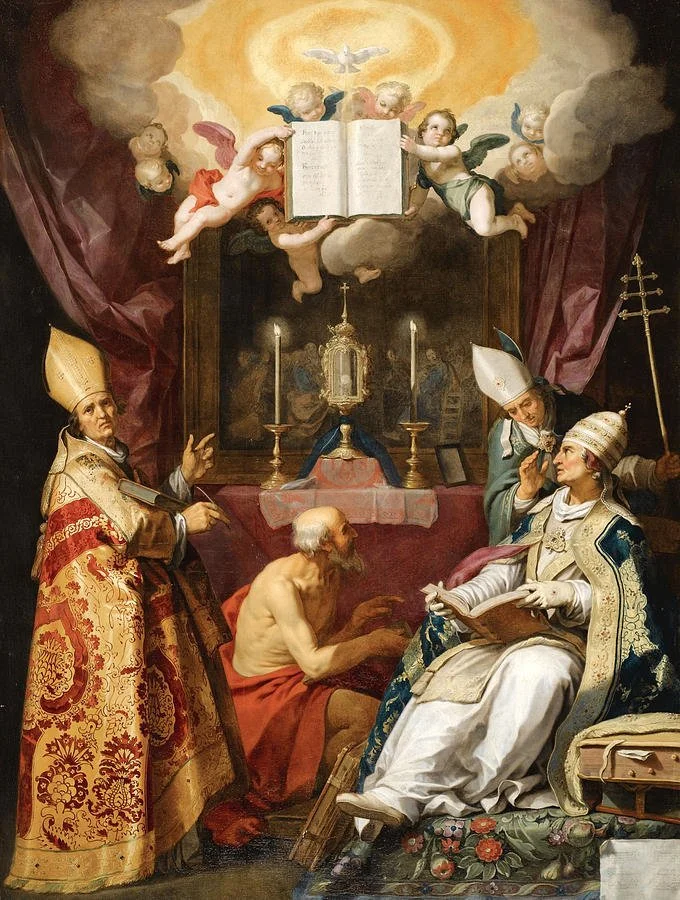
Do you ever wonder how the English Bible you hold in your hand, or read on your phone, came to be? After all, the Bible wasn’t written in English, but in Hebrew and Greek - so how was it translated, when was it translated and who made it happen?
The history of English Bible translation is a fascinating journey of risk, immense cost and incredible perseverance. As a Bible translation agency translating God’s Word into oral and written languages all over the world for those who have no access to Scripture, we know first-hand the monumental effort it takes to translate the Bible. [1]
So, let’s dive into a quick history of the English Bible.
St Bede, the Trailblazer
It may surprise you to know that until 731 AD, not one word of the Bible existed in English. As an ordinary layperson, the only way to hear Scripture was through the Latin liturgy of the Catholic church. You couldn’t read it yourself, study it, or even lay eyes on the text.
“I have devoted my energies to the study of the scriptures…study, teaching and writing have always been my delight.”
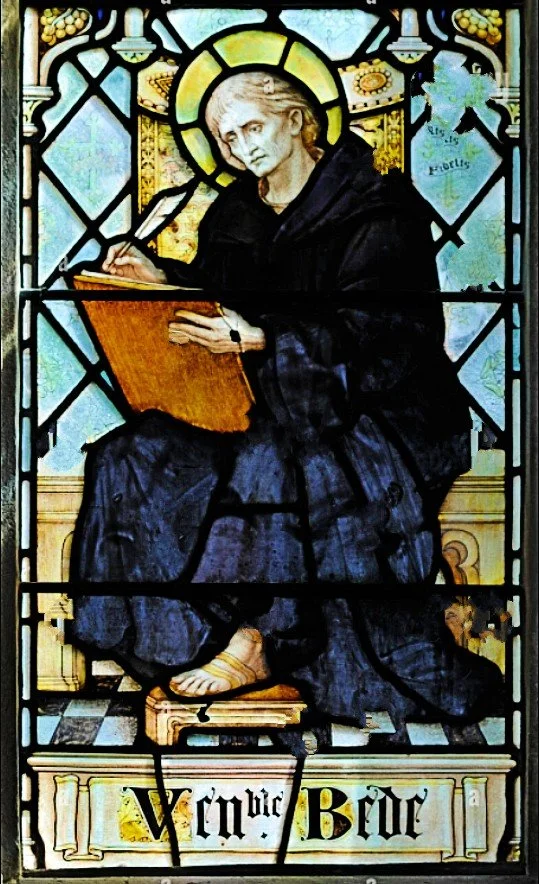
St Bede (673-735), a monk from Jarrow, Newcastle, was the first man in England who believed that his fellow Christians would benefit from an English translation of the Bible. He set out to translate the gospel of John into Old English (Anglo-Saxon), diligently dictating it to his scribe, Wilbert, for many years, and finishing it on his deathbed. He said,
As a monk, his final act set a powerful precedent for making the Word of God accessible. For the first time in Britain part of the Bible existed in the common tongue of the people.
The West Saxon Way Makers
Fast forward another three hundred years, and four gospels were translated in full into the West Saxon dialect of Old English. How much of this English do you recognise?
“God lufede middan-eard swa þæt he sealde hys akennedan sune þæt nan ne for-wurðe þe on hine ge-lefð. Ac habbe þt eche lyf.”
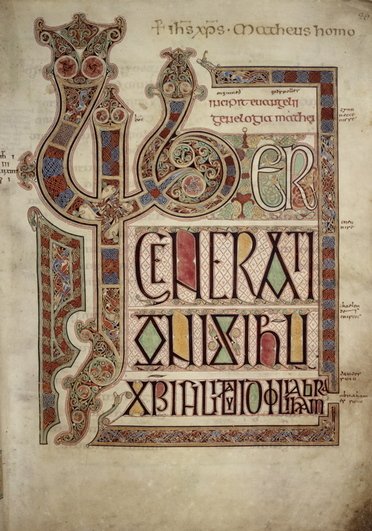
The Wessex gospels were produced around 990 AD by men whose identities have been lost to history, but not to God. Unlike St Bede’s translation, copies of the Wessex gospels still exist and can be viewed at the Parker Library in Cambridge, and at the Bodleian Library in Oxford. It is clear that these translations were produced so that hearers could more fully understand the words of God in their own language – and what a blessing that must have been.
‘Jesus sent out his disciples to spread the words and deeds of the Lord to all people. With respect to the Anglo-Saxons, this order was impressively executed by the earliest translation of the [Latin] Vulgate gospels into the West Saxon gospels.’ [2]
However, these versions were produced by monks, for the Catholic church, and Britain was still a long way from ordinary people being able to access Scripture themselves.
John Wycliffe: The Persecuted Pioneer
Enter John Wycliffe (1324 – 1384). A Christian reformer and theology professor at the University of Oxford, John Wycliffe was the first translator of the English Bible. He believed that the Bible was for everyone and that the Latin barrier must be overcome. He led a team that translated the full Bible from the Latin Vulgate into Middle English. The Church was furious, labelling the work as heresy, and naming Wycliffe ‘a child of the devil’ for daring to put the Bible into the hands of ordinary men and women. They even exhumed and burned his body after his death, in a final act of vengeance.
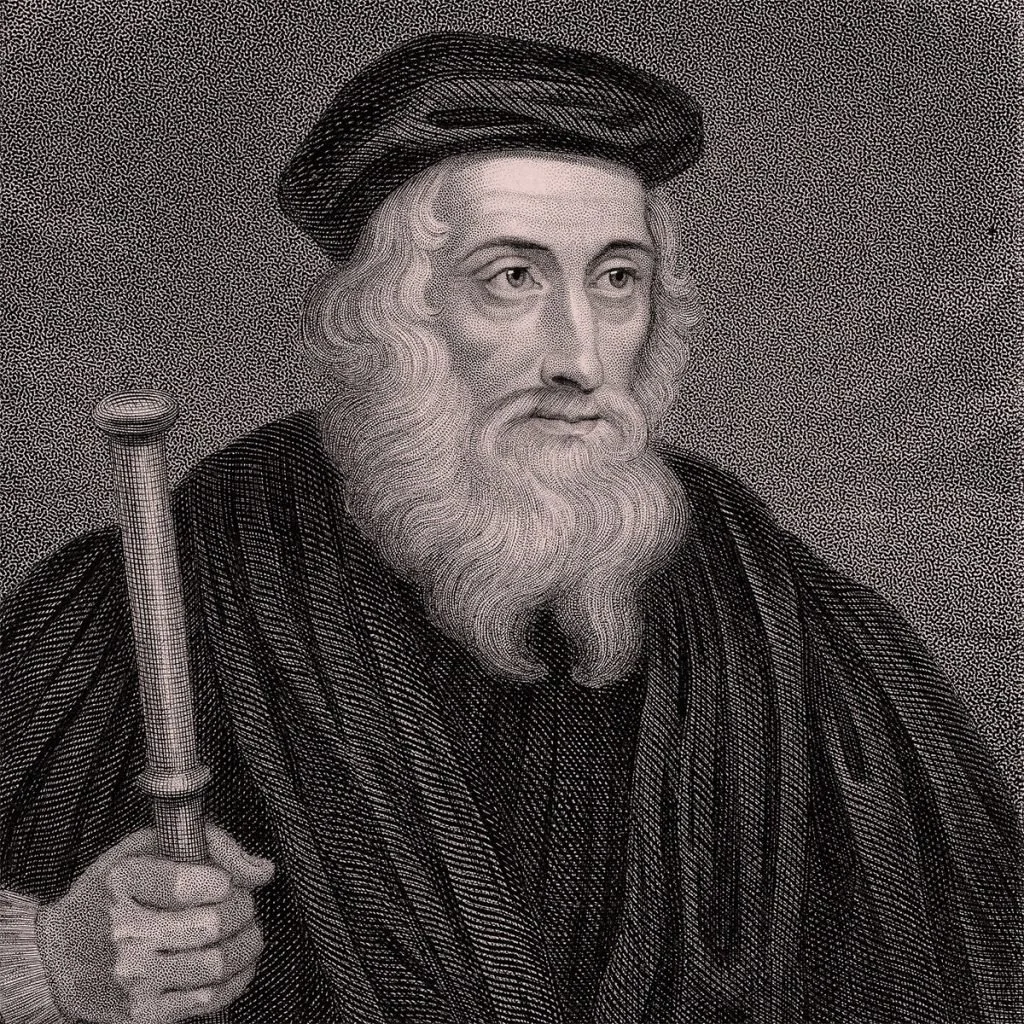
Undeterred, hand-written copies were widely distributed by Wycliffe’s followers as they travelled around the country teaching about Jesus, carrying on Wycliffe’s belief that:
‘The laity ought to understand the faith and, as doctrines of our faith are in the Scriptures, believers should have the Scriptures in a language which they fully understand.’ – John Wycliffe
Determined to put a stop to this ‘rebellion’, the Church aggressively sought out and destroyed almost all these hand-produced copies. But there was an important event on the horizon: in 1440 the printing press was invented, with the first one arriving in England in 1476. In God’s perfect timing, this was going to dovetail beautifully with the work of William Tyndale (1494-1536).
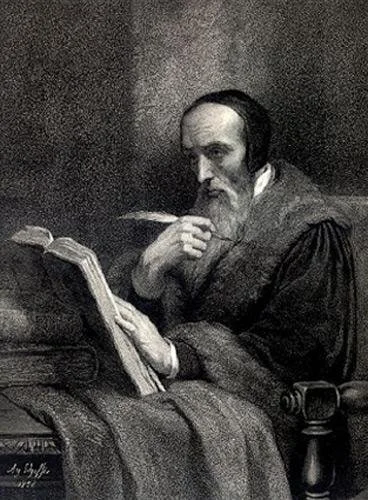
William Tyndale: Changing the Landscape of Bible Translation
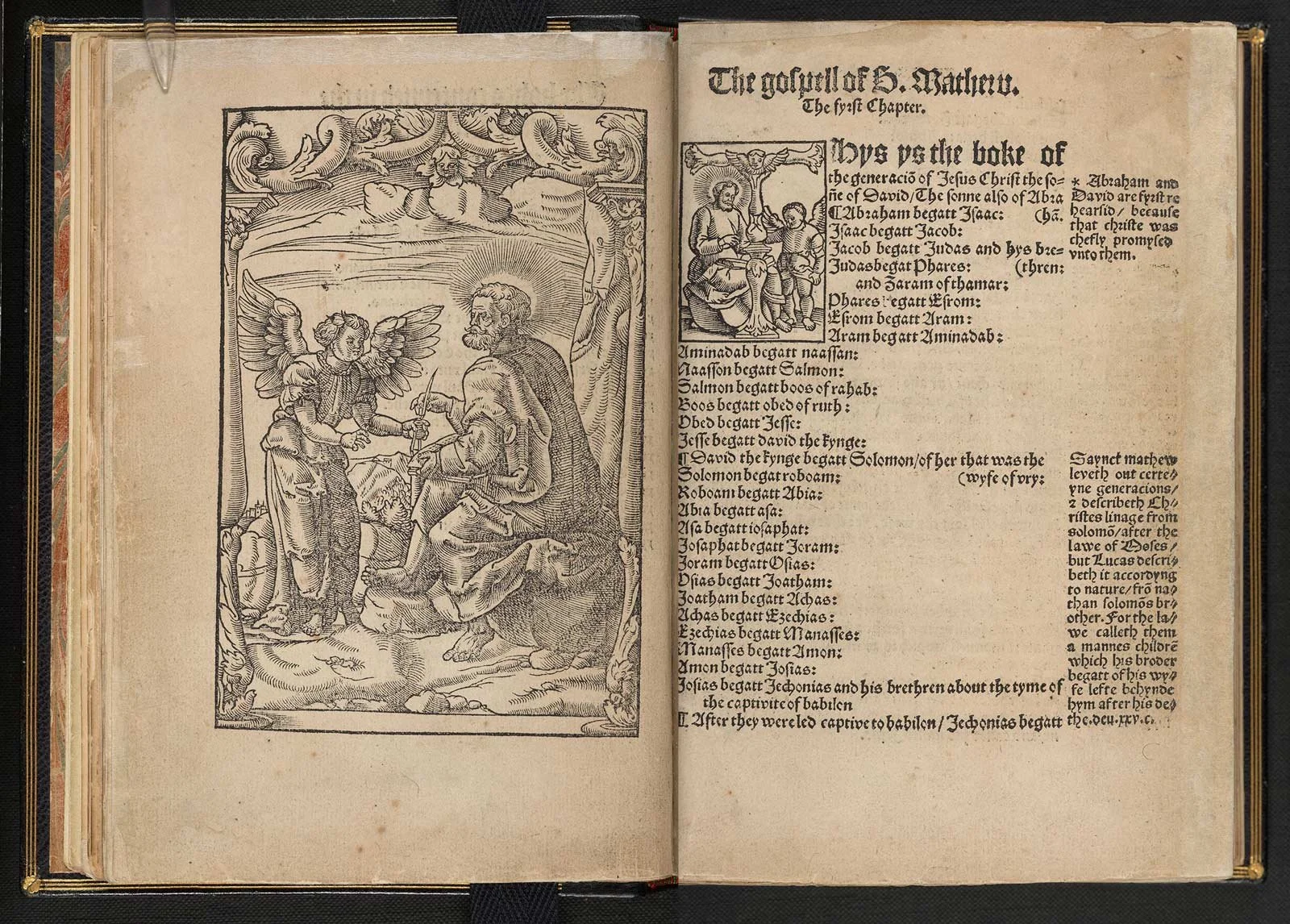
Tyndale was a biblical scholar and linguist who taught at the University of Cambridge. Like Wycliffe, he was convinced that all believers should be able to read the Bible in their own language, but instead of translating from the Latin Vulgate, he went back to the original Hebrew and Greek texts. He began translating the New Testament in 1523, but immediately ran into trouble with the church and authorities. With the financial support of a tailor called Humphrey Monmouth [3], he fled to Germany to continue his work and completed the New Testament, Pentateuch and part of the Old Testament, before he was captured and condemned for heresy. He was executed by strangulation and then burned at the stake in Vilvoorde, Belgium, in 1536.
At the time of his death, 18,000 copies of the New Testament had been printed, and his translations had spread far and wide. He had created a Bible that was readable, understandable and faithful, and that would go on to serve as the model for the version we read today. Over 80% of the New Testament in the 1611 King James Bible directly reflects Tyndale’s wording, and his coining of famous phrases such as ‘scapegoat’, ‘atonement’ and ‘let there be light’ have reached deep into our English vocabulary [4]. His vision of making Scripture accessible to all is becoming a reality.
“I defy the Pope and all his laws. If God could spare my life, ere many years I will cause a boy that driveth the plow to know more of the Scripture than you do.”
The Story is Not Over
Nowadays we have over 900 English Bible translations to choose from [5]. From the easy-read New Living Translation to the traditional King James version, we are richly blessed with options of how we can read and enjoy God’s Word.
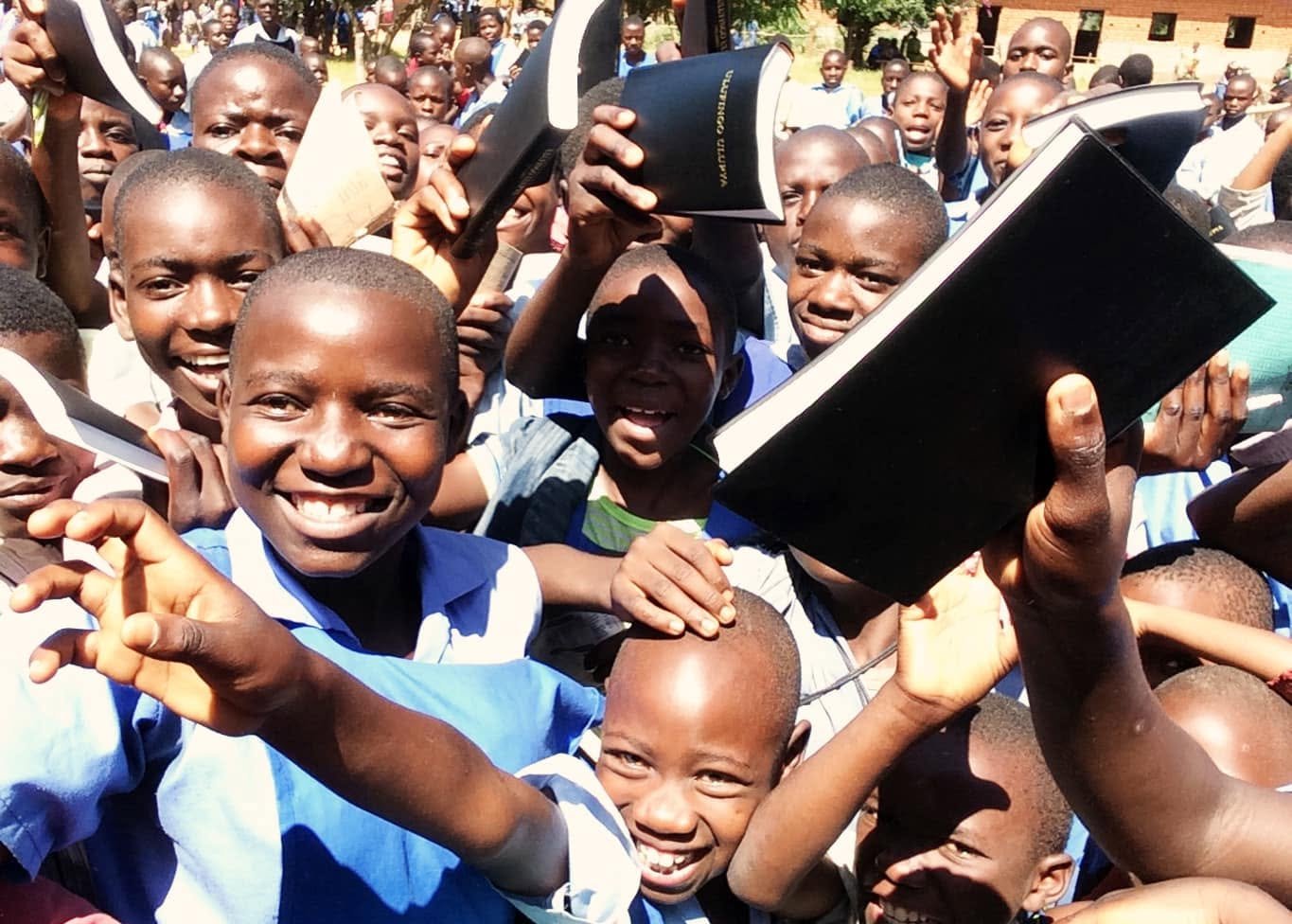
But did you know that there are more than 3,000 language groups around the world that still don’t have a translation of any portion of the Bible? Not one book; not one verse; not even John 3:16!
Consider for a moment the efforts of the people involved in the journey of the translation of the Bible into English, and the sacrifices those people made. All so that we could hold God’s Word in our hands, in our own language, and get to know Him more dearly. Those sacrifices were made for us. Do we take that for granted on a daily basis?
In our Bible translation work we are making these same efforts – sadly, sometimes with the same level of sacrifice. A translation team member was recently killed in an Asian country for helping translate the Bible for a people group who don’t yet have access to God’s Word. We are doing this so that others can read God’s Word in their own language for the first time. That passion of Wycliffe, Tyndale, and so many others, burns within us. We believe that God loved us enough to send His Son to die for us, and that everyone should be able to read of that love, so that they too can know their Saviour.
We have the people, skills and technology to make this happen, but we need your support. If you can join us in prayer, or enable our work financially, we would love to have you onboard. Please click here to find out more.
‘Christ desires his mysteries to be published abroad as widely as possible. I would that it were translated into all languages, of all Christian people, and that they might be read and known.’ – William Tyndale
references:
[3] We Know William Tyndale. But do you know the man who made his mission possible?
[4] Delving into Bible Translation Accuracy — The Word For The World UK - Bible Translators
[5] How Many Languages is the Bible Translated Into? — The Word For The World UK - Bible Translators
[7] How to pray for Bible Translation and Translators — The Word For The World UK - Bible Translators
[8] Give to support Bible translation — The Word For The World UK - Bible Translators
[9] The Word For The World UK - Bible Translators - Let's end Bible poverty.
